-
Shop
- Advanced Technologies
- AI Career Advantage Collection
- AI Skills
- AI Skills for Creators & Freelancers
- AI Client Management
- AI Ethics
- AI Mindset
- AI Tools & Prompts
- AI Writing & Content Creation
- Audio, Voice & Music
- Design & Visual Creation
- Email, Messaging & Communication
- Freelancing & Business
- Marketing, Ads & Conversion
- Productivity, Workflow & Automation
- SEO & Search Optimization
- Social Media Content & Growth
- Strategy, Planning & Analytics
- Video Creation & Editing
- Bathroom
- Beauty
- Best-Sellers
- Car Accessories
- Car Buying & Ownership
- Confidence
- Dating & Social Skills
- Digital Resources
- AI & Technology
- Budgeting & Saving
- Cozy Feast Collection
- Electronics & Technology
- Emotional Intelligence
- Entrepreneurship & Business Growth
- Financial Education
- Financial Independence
- Financial Mindset & Psychology
- Goal Setting
- Hobbies
- Kitchen & Recipes
- Leadership
- Mindfulness
- Mindset
- Motivation
- Online Business
- Positive Thinking
- Productivity
- Self Confidence
- Sleep Improvement
- Smart Life with AI
- Stress Management & Relaxation
- Travel Planning
- Yoga & Fitness
- Yoga & Mind-Body Practices
- Education & Learning
- Family & Parenting
- Gadgets
- Health & Beauty
- Health & Wellness
- Home & Garden
- Home Styling & Organization
- Home Supplies
- Kids & Babies
- Legend Footwear Brands Collection
- Online Business for Beginners
- Parenting & Child Development
- Patio, Lawn & Garden
- Personal Growth
- Personal Style & Fashion
- Pet Care
- Pet Lifestyle & Wellness
- Pet Supplies
- Pets
- Smart Amazon Shopping
- Stress Relief & Relaxation
- TikTok Growth & Monetization Mastery
- Travel
- Travel & Adventure
- Wealth
- Wellness
- Popular
- Best deals
Puma Buyer Uncovered: Build Smarter Buyer Profiles
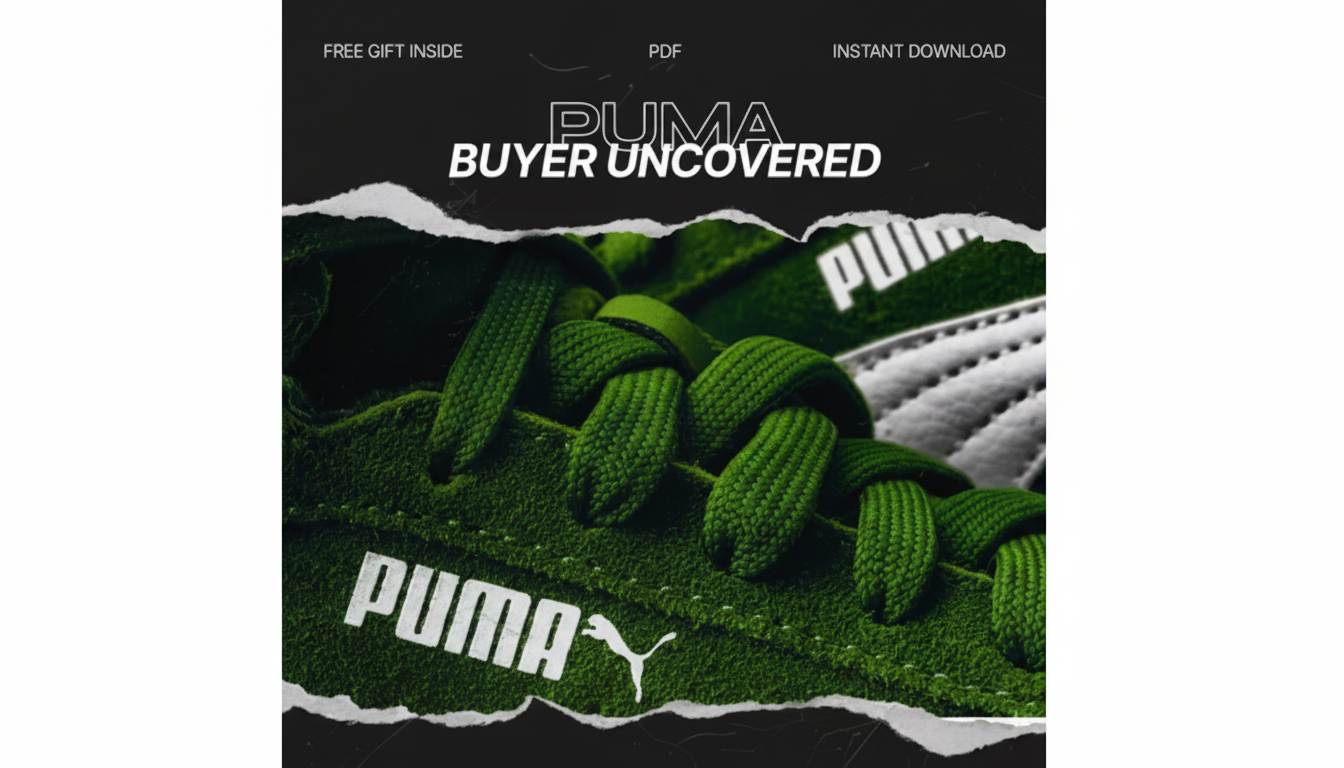
Puma Buyer Uncovered: Turning Audience Insight Into Smarter Marketing and Brand Growth
Strong positioning starts with knowing who buys, why they buy, and what nudges them from interest to action. Puma Buyer Uncovered is a compact, practical eBook designed to help marketers, founders, and creators build clearer buyer profiles and translate them into messaging, offers, and channel decisions that feel natural to the customer journey. For more guidance, see Puma Marketing Strategy: Case Study for Digital Branding Success.
What a “buyer profile” solves (and what it doesn’t)
A buyer profile goes beyond basic demographics to capture the motivations and behaviors that actually drive purchase decisions. Age, location, and income can help with targeting, but they rarely explain why someone chooses one shoe or apparel line over another—or why they hesitate at checkout.
- Clarifies the difference between broad demographics and purchase-driving motivations
- Helps reduce wasted ad spend by aligning creative, targeting, and landing pages with real buyer intent
- Improves product positioning by identifying the top “jobs to be done” and deal-breakers
- Sets realistic expectations: a profile is a decision tool, not a guarantee of outcomes
When teams pair buyer insight with a consistent positioning system, the result is usually cleaner segmentation, sharper creative, and fewer random pivots. This aligns well with established frameworks like STP (Segmentation, Targeting, Positioning), where clarity in “who” and “why” supports smarter channel and message choices.
Who benefits most from Puma Buyer Uncovered
- Ecommerce teams refining audience segments and creative angles
- Brand managers planning campaigns that need a consistent voice across channels
- Agencies onboarding a sportswear or lifestyle client and needing a fast research baseline
- Content teams building topic clusters around buyer motivations, objections, and comparisons
- Founders validating which messages resonate before scaling spend
Core insights to extract from the eBook
Puma buyers don’t arrive with one single intent. They blend performance needs, style identity, and value perception—and they can switch priorities depending on timing, product category, and context.
- Buyer motivations: performance, style identity, trend influence, comfort, and value perception
- Decision triggers: launches, limited drops, seasonal promotions, fitness goals, and peer influence
- Objections that stall purchases: sizing uncertainty, durability concerns, shipping/returns friction, and price comparisons
- Channel behavior patterns: how discovery differs across social, search, retail, and influencer touchpoints
- Retention levers: post-purchase satisfaction drivers, loyalty cues, and reactivation prompts
To validate what’s happening on-site and what users do before converting, measurement tools like Google Analytics help confirm where interest drops and which pages contribute to assisted conversions.
From insight to execution: a simple workflow
The fastest path from insight to results is a repeatable workflow that turns buyer realities into decisions teams can ship: what to say, where to say it, and what proof removes friction.
- Map each insight to a marketing decision: message, offer, creative, channel, or landing page structure
- Write one “primary promise” and three supporting proofs (materials, performance, social proof, guarantees)
- Create an objections checklist and address it in the first 10 seconds of the page/ad
- Build a two-tier campaign plan: acquisition (discovery + consideration) and retention (repeat + referral)
- Set measurement around behavior signals: add-to-cart rate, PDP scroll depth, return rate, repeat purchase window
Insight-to-Action Map
| Buyer insight | Best place to use it | What to change | Success signal |
|---|---|---|---|
| Performance-driven motivation | Product page + paid social | Lead with function benefits and measurable specs | Higher click-through and time on page |
| Style/identity motivation | Influencer content + organic social | Visual-first storytelling and outfit pairings | Higher saves, shares, and assisted conversions |
| Price sensitivity | Email + retargeting | Value framing, bundles, limited-time incentives | Lift in conversion rate during campaign window |
| Sizing uncertainty | Product page + support widgets | Fit guide, reviews, easy exchanges, size recommendations | Lower return rate and fewer support tickets |
Messaging angles that stay consistent across channels
Consistency doesn’t mean repeating the same headline everywhere. It means holding the same promise while adapting the proof to the channel’s role in the journey.
- Benefit-first headlines supported by proof: materials, comfort, durability, and real-world use cases
- Audience language: mirror how buyers describe their goals (training, lifestyle, commuting, casual sport)
- Social proof hierarchy: expert/influencer signals for discovery, verified reviews for conversion
- Offer discipline: keep one core offer and adapt the framing per channel rather than constantly changing discounts
Building “proof” into the story also supports long-term brand memory and preference, a core idea in Keller’s Customer-Based Brand Equity model.
Audience segments to test (without overcomplicating)
How to use the profile for faster campaign planning
What’s included and how it fits into a broader strategy
Get the eBook
For teams that want a tighter handle on audience motivations and decision-making patterns, Puma Buyer Uncovered – The Ultimate Puma Buyer Profile eBook for Audience Insights, Marketing Strategy & Brand Growth turns scattered assumptions into a repeatable, testable buyer framework.
- Speak Up, Shine Bright: Unlocking Confident Communication – A Practical Guide on how to build confidence in communication skills for Work, Life & Leadership
- Coffee-Ready Cozy – What to Wear for Coffee Meetups Checklist | Effortless Café Outfit Planning Guide
FAQ
How is a buyer profile different from a target audience description?
A target audience description is often demographic (who they are), while a buyer profile focuses on what drives purchase decisions: motivations, triggers, objections, and behaviors. That extra layer helps shape messaging, proof, and offers that match intent.
How quickly can insights from the eBook be applied to campaigns?
Many insights can be applied the same day by tightening a campaign brief and updating key landing page elements like the primary promise and objection handling. A practical testing cycle typically takes 1–2 weeks, starting with the highest-friction issues such as sizing confidence or returns clarity.
What data should be used to validate or refine the profile?
Use first-party analytics, customer reviews, surveys, and support/returns data to confirm what customers value and where they hesitate. Refreshing the profile quarterly helps keep messaging aligned as products, competitors, and customer expectations shift.
Recommended for you

Name Your Inner Voice: 5 Simple Options That Help
Jun 26, 2026













Leave a comment