-
Shop
- Advanced Technologies
- AI Career Advantage Collection
- AI Skills
- AI Skills for Creators & Freelancers
- AI Client Management
- AI Ethics
- AI Mindset
- AI Tools & Prompts
- AI Writing & Content Creation
- Audio, Voice & Music
- Design & Visual Creation
- Email, Messaging & Communication
- Freelancing & Business
- Marketing, Ads & Conversion
- Productivity, Workflow & Automation
- SEO & Search Optimization
- Social Media Content & Growth
- Strategy, Planning & Analytics
- Video Creation & Editing
- Bathroom
- Beauty
- Best-Sellers
- Car Accessories
- Car Buying & Ownership
- Confidence
- Dating & Social Skills
- Digital Resources
- AI & Technology
- Budgeting & Saving
- Cozy Feast Collection
- Electronics & Technology
- Emotional Intelligence
- Entrepreneurship & Business Growth
- Financial Education
- Financial Independence
- Financial Mindset & Psychology
- Goal Setting
- Hobbies
- Kitchen & Recipes
- Leadership
- Mindfulness
- Mindset
- Motivation
- Online Business
- Positive Thinking
- Productivity
- Self Confidence
- Sleep Improvement
- Smart Life with AI
- Stress Management & Relaxation
- Travel Planning
- Yoga & Fitness
- Yoga & Mind-Body Practices
- Education & Learning
- Family & Parenting
- Gadgets
- Health & Beauty
- Health & Wellness
- Home & Garden
- Home Styling & Organization
- Home Supplies
- Kids & Babies
- Legend Footwear Brands Collection
- Online Business for Beginners
- Parenting & Child Development
- Patio, Lawn & Garden
- Personal Growth
- Personal Style & Fashion
- Pet Care
- Pet Lifestyle & Wellness
- Pet Supplies
- Pets
- Smart Amazon Shopping
- Stress Relief & Relaxation
- TikTok Growth & Monetization Mastery
- Travel
- Travel & Adventure
- Wealth
- Wellness
- Popular
- Best deals
High-End Living Room Styling: Quiet Luxury Checklist
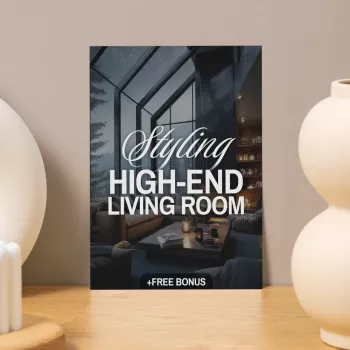
Styling a High-End Living Room: A Quiet-Luxury Blueprint for Modern Elegance
A high-end living room feels effortless, but the polish comes from deliberate choices: proportion, restraint, tactile materials, and a lighting plan that flatters everything it touches. Our team uses the same repeatable framework in real homes—so your space reads elevated from every angle without feeling staged or overdone.
Start With the High-End “Read”: Proportion, Negative Space, and One Clear Focal Point
Before you buy anything new, decide what the room is about. One primary focal point should lead the layout—then everything else supports it quietly. That’s the calm, composed “read” you notice in truly high-end rooms.
- Choose one focal point (fireplace wall, statement sofa, or a media-console wall). Keep secondary moments simpler so the room feels curated, not busy.
- Prioritize scale: anchor pieces should feel intentionally substantial, with breathing room around them. Luxury often looks like generous spacing and easy walkways.
- Use symmetry for calm (paired chairs, matching lamps), then break it slightly with one organic shape or sculptural object so it doesn’t feel rigid.
- Edit early: fewer pieces, better quality. Presence beats quantity every time.
A Simple Luxury Layout Checklist (Fast Room Audit)
| Element | Target Effect | Quick Test |
|---|---|---|
| Focal point | Instant visual hierarchy | Can the eye land on one main feature within 2 seconds? |
| Walkways | Effortless flow | Is there clear passage without moving furniture? |
| Anchor piece scale | Intentional presence | Does the main sofa/console look “right-sized,” not undersized? |
| Negative space | Quiet luxury | Is there at least one “resting” area with no decor? |
| Balance | Composed, not chaotic | Do heavier visuals have a counterweight across the room? |
Choose a Luxury Palette That Feels Modern, Not Flat
Quiet luxury doesn’t mean “all beige.” It means a restrained base with depth built through tone, sheen, and texture—so the room feels layered without feeling colorful.
- Start with a calm foundation: warm whites, soft taupes, stone greys, deep charcoals. Use multiple tones of the same family for dimension.
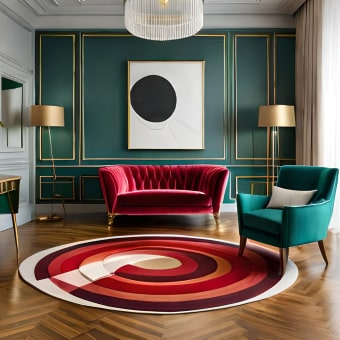
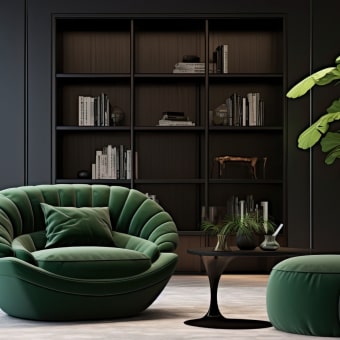
- Add one controlled deep accent (ink, espresso, oxblood, forest) in a single strong move—one upholstered piece, a pair of pillows, or a large artwork.
- Keep metals consistent within sightlines. Two finish families can look elevated (example: brushed brass + matte black), but avoid a scattered mix.
- Repeat materials at least twice so they read intentional—walnut in a coffee table and a frame; stone in a console top and a tray.
Invest Where It Shows: Upholstery, Casegoods, and Texture
If you want the room to feel expensive daily—not just when it’s perfectly clean—put your budget into what you touch and what holds visual weight.
- Upholstery sets the standard: tailored silhouettes, supportive cushions, and performance fabrics that hold their look in real life.
- Layer tactile texture: bouclé, velvet, leather, linen, wool, lacquer, marble, fluted wood. Luxury is often felt before it’s noticed.
- Choose grounded casegoods: substantial legs, clean joinery lines, and finishes that look intentional in daylight and lamplight.
- Avoid matching sets. Coordinated is refined; identical looks flat.
Lighting Is the Difference Between Nice and High-End
Lighting is the easiest place to miss—and the fastest place to level up. A room should still look beautiful with only lamps on.
- Plan three layers: ambient (overhead), task (reading), and accent (art/shelves/architecture).
- Use warm color temperatures (often 2700K–3000K) and add dimmers wherever possible for a softer, luxe glow.
- Choose fixtures with presence: an oversized floor lamp, sculptural table lamps, or a refined chandelier scaled to the room.
- Distribute light to corners and vertical surfaces to avoid the “single bright center” effect.
The Elevated Styling Formula: Fewer Objects, Better Placement
High-end styling is not about filling surfaces—it’s about creating small, intentional moments with room to breathe.
- Build one strong tray moment, then stop: a sculptural object, an organic element, and a tight book stack is often plenty.
- Vary heights and silhouettes: tall (lamp/branches), medium (vase/candle), low (bowl/books) creates quiet rhythm.
- Use foundation decor that looks elevated year-round: stone trays, thick glass, ceramic vessels, linen-bound books, matte metal accents.
- Leave a negative-space zone on coffee tables and consoles so the room feels calm, not curated-to-death.
Pull It Together: A Repeatable Step-by-Step Roadmap
If you prefer a structured, room-by-room process with checklists and styling prompts, we built our Styling High-End Living Room eBook (digital download) to take you from blank to finished without second-guessing.
Curated Pieces That Support a High-End Look (Optional Upgrades)
- Luxury 70″ Fluted Fireplace TV Stand: a strong choice when you want architectural texture and a grounded media focal point that brings warmth and structure.
- Luxury Minimalist Lounge Sofa: a tailored baseline with clean lines and generous scale that supports layered textiles without visual noise.
Credible Design References (If You Want a Deeper Dive)
For broader industry guidance and inspiration, two reliable starting points are the American Society of Interior Designers (ASID) and Architectural Digest.
FAQ
What makes a living room look high-end instead of simply expensive?
A high-end room shows discipline: strong proportion, intentional negative space, cohesive materials, layered lighting, and edited decor. It feels calm and tactile rather than full of “more.”
How can a modern living room feel luxurious without adding more furniture?
Refine what you already have by strengthening lighting layers, tightening the palette, adding texture with a rug/pillows/throws, and restyling surfaces in intentional groupings. One right-sized anchor piece can also elevate the entire room.
What is the fastest way to make the room feel more elevated in one weekend?
Re-center the layout around one focal point, remove visual clutter, add balanced lighting (two matching lamps or one lamp plus a floor lamp), and swap to larger-scale art. Finish by restyling one main surface with a tray grouping and varied heights.
Recommended for you


Where to Keep Down Payment Savings Before Closing
Sep 30, 2026








Leave a comment