-
Shop
- Advanced Technologies
- AI Career Advantage Collection
- AI Skills
- AI Skills for Creators & Freelancers
- AI Client Management
- AI Ethics
- AI Mindset
- AI Tools & Prompts
- AI Writing & Content Creation
- Audio, Voice & Music
- Design & Visual Creation
- Email, Messaging & Communication
- Freelancing & Business
- Marketing, Ads & Conversion
- Productivity, Workflow & Automation
- SEO & Search Optimization
- Social Media Content & Growth
- Strategy, Planning & Analytics
- Video Creation & Editing
- Bathroom
- Beauty
- Best-Sellers
- Car Accessories
- Car Buying & Ownership
- Confidence
- Dating & Social Skills
- Digital Resources
- AI & Technology
- Budgeting & Saving
- Cozy Feast Collection
- Electronics & Technology
- Emotional Intelligence
- Entrepreneurship & Business Growth
- Financial Education
- Financial Independence
- Financial Mindset & Psychology
- Goal Setting
- Hobbies
- Kitchen & Recipes
- Leadership
- Mindfulness
- Mindset
- Motivation
- Online Business
- Positive Thinking
- Productivity
- Self Confidence
- Sleep Improvement
- Smart Life with AI
- Stress Management & Relaxation
- Travel Planning
- Yoga & Fitness
- Yoga & Mind-Body Practices
- Education & Learning
- Family & Parenting
- Gadgets
- Health & Beauty
- Health & Wellness
- Home & Garden
- Home Styling & Organization
- Home Supplies
- Kids & Babies
- Legend Footwear Brands Collection
- Online Business for Beginners
- Parenting & Child Development
- Patio, Lawn & Garden
- Personal Growth
- Personal Style & Fashion
- Pet Care
- Pet Lifestyle & Wellness
- Pet Supplies
- Pets
- Smart Amazon Shopping
- Stress Relief & Relaxation
- TikTok Growth & Monetization Mastery
- Travel
- Travel & Adventure
- Wealth
- Wellness
- Popular
- Best deals
Quiet the Mind: Simple Calming Habits & Soothing Tools

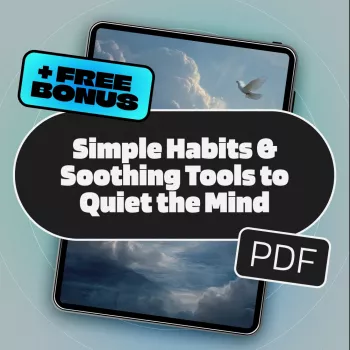
Simple Habits & Soothing Tools to Quiet the Mind: A Calmer Day, One Small Moment at a Time
Calm rarely arrives as a single, life-changing breakthrough—it’s more often built through small, repeatable choices that gently signal safety to the nervous system. Our team created Simple Habits & Soothing Tools to Quiet the Mind | Calming Things eBook (Digital Download) for everyday anxiety relief and peaceful living, with practical, low-pressure ways to soften mental noise, steady your body, and return to the present. If you want calming things that fit real schedules—short routines, easy tools, and supportive prompts you can use at home, at work, or while traveling—this guide meets you where you are.
What “quieting the mind” can look like in real life
Quieting your mind doesn’t mean forcing thoughts to disappear. In real life, it can be as simple as changing how long you stay caught in a loop—and how quickly you can come back to steadiness.
- Reducing spirals instead of eliminating thoughts: the goal is fewer loops, shorter loops, and faster returns to center.
- Creating predictable cues of safety: light, sound, scent, touch, breath, and simple structure can all help your body settle.
- Building a personal “calm menu”: so you don’t have to decide what to do while you’re already stressed.
- Choosing gentle consistency over intensity: calming habits work best when they’re small enough to repeat on ordinary days.
- Supporting both mind and body: anxious thinking often travels with a revved-up nervous system, so the most helpful tools address both.
A quick calm menu: match the tool to the moment
| Situation | What it often feels like | Try this first | Why it helps |
|---|---|---|---|
| Racing thoughts at bedtime | Restless, mentally “busy” | 3-minute brain-dump + slow exhale breathing | Externalizes thoughts and lengthens exhale to encourage downshifting |
| Overwhelm during the day | Too much at once, can’t start | One-minute reset: sip water + pick one next step | Adds a pause, reorients attention, restores a sense of control |
| Tension in the body | Tight shoulders/jaw, shallow breath | Progressive muscle release (hands/shoulders/jaw) | Signals the body to release and interrupts tension loops |
| Anxiety spike in public | Heart rate up, scattered attention | Grounding with 5-4-3-2-1 + steady feet | Returns focus to sensory input and physical stability |
| Emotional fatigue | Irritable, numb, or fragile | Low-stimulation comfort: dim light + soft texture + quiet music | Reduces sensory load and invites gentle regulation |
What’s inside the eBook: simple habits, soothing tools, and calming things that actually fit your day
This download is built for the days when you want support without a complicated plan. You’ll find:
Build your personal toolkit (pick a few, not all)
| Toolkit category | Examples of calming things | Best time to use | Keep it simple tip |
|---|---|---|---|
| Breath + body | Extended exhales, muscle release, gentle stretches | When the body feels “sped up” | Pair with a daily cue (kettle, shower, commute) |
| Mind + attention | Journaling prompts, grounding, thought “parking” list | When thoughts feel sticky | Limit to one page or one minute |
| Sensory comfort | Soft textures, warm drink, calming sound | When you feel overstimulated | Create one “calm corner” with 3 items |
| Routine + structure | Morning check-in, midday reset, evening wind-down | When life feels chaotic | Anchor routines to what already exists |
A gentle 7-day reset: a simple way to start using the guide
A simple habit formula to make calm more automatic
| Cue | Tiny action | Reward |
|---|---|---|
| Boiling water / making coffee | 3 slow exhales | Body feels steadier before the day ramps up |
| Sitting in the car before driving | Name one priority + one boundary | Less mental clutter and fewer rushed decisions |
| Plugging in your phone at night | One-minute journal: “What can wait until tomorrow?” | Permission to rest without finishing every thought |
Peaceful living at home: small environment shifts that support a quieter mind
Make one space feel calmer without a full reset
| Area | One-minute change | Five-minute change |
|---|---|---|
| Bedroom | Dim the lights and clear the pillow area | Set out water + book/journal; remove one distracting item |
| Living room | Put remotes and loose items in one tray | Create a “comfort basket” (blanket, tea, notebook) |
| Bathroom | Put a hand towel and lotion within reach | Set a wind-down cue (quiet music or candle-safe option) |
| Desk | Close extra tabs and place phone face-down | Pick one “next step” sticky note; clear one small pile |
Who this digital download is best for—and how to use it so it stays supportive
If you’re building a broader self-support library, our team also recommends pairing calming skills with confidence-building and home-comfort resources, depending on what you’re navigating right now: Confident Again: Your Step-by-Step Guide to Rebuilding Self-Belief (eBook) and Styling High-End Living Room (eBook Guide).
Helpful, reputable resources to learn more
- National Institute of Mental Health (NIMH) — Anxiety Disorders
- American Psychological Association (APA) — Stress effects on the body
- NCCIH (NIH) — Mind and Body Practices for Health
FAQ
How does the download work after purchase?
After checkout, you’ll receive access to the digital file as a download through your order confirmation and/or your account’s download area. We recommend saving a backup copy to a folder you can easily find later (and optionally to a cloud drive) so it’s always within reach.
Is this eBook meant to replace therapy or medical care for anxiety?
No—this is an educational self-care resource designed to support everyday regulation skills and calming routines. It can be a helpful complement to professional care, and it’s important to seek qualified support if symptoms are severe, worsening, or feel urgent.
What if I’m too busy to follow a full routine?
The guide is built around micro-practices, so you can choose 1–2 tools and keep them small on purpose. Start with a 60-second reset and attach it to something you already do daily, like making coffee or plugging in your phone at night.











Leave a comment