-
Shop
- Advanced Technologies
- AI Career Advantage Collection
- AI Skills
- AI Skills for Creators & Freelancers
- AI Client Management
- AI Ethics
- AI Mindset
- AI Tools & Prompts
- AI Writing & Content Creation
- Audio, Voice & Music
- Design & Visual Creation
- Email, Messaging & Communication
- Freelancing & Business
- Marketing, Ads & Conversion
- Productivity, Workflow & Automation
- SEO & Search Optimization
- Social Media Content & Growth
- Strategy, Planning & Analytics
- Video Creation & Editing
- Bathroom
- Beauty
- Best-Sellers
- Car Accessories
- Car Buying & Ownership
- Confidence
- Dating & Social Skills
- Digital Resources
- AI & Technology
- Budgeting & Saving
- Cozy Feast Collection
- Electronics & Technology
- Emotional Intelligence
- Entrepreneurship & Business Growth
- Financial Education
- Financial Independence
- Financial Mindset & Psychology
- Goal Setting
- Hobbies
- Kitchen & Recipes
- Leadership
- Mindfulness
- Mindset
- Motivation
- Online Business
- Positive Thinking
- Productivity
- Self Confidence
- Sleep Improvement
- Smart Life with AI
- Stress Management & Relaxation
- Travel Planning
- Yoga & Fitness
- Yoga & Mind-Body Practices
- Education & Learning
- Family & Parenting
- Gadgets
- Health & Beauty
- Health & Wellness
- Home & Garden
- Home Styling & Organization
- Home Supplies
- Kids & Babies
- Legend Footwear Brands Collection
- Online Business for Beginners
- Parenting & Child Development
- Patio, Lawn & Garden
- Personal Growth
- Personal Style & Fashion
- Pet Care
- Pet Lifestyle & Wellness
- Pet Supplies
- Pets
- Smart Amazon Shopping
- Stress Relief & Relaxation
- TikTok Growth & Monetization Mastery
- Travel
- Travel & Adventure
- Wealth
- Wellness
- Popular
- Best deals
Smart Lighting Upgrades to Brighten Your Home Fast
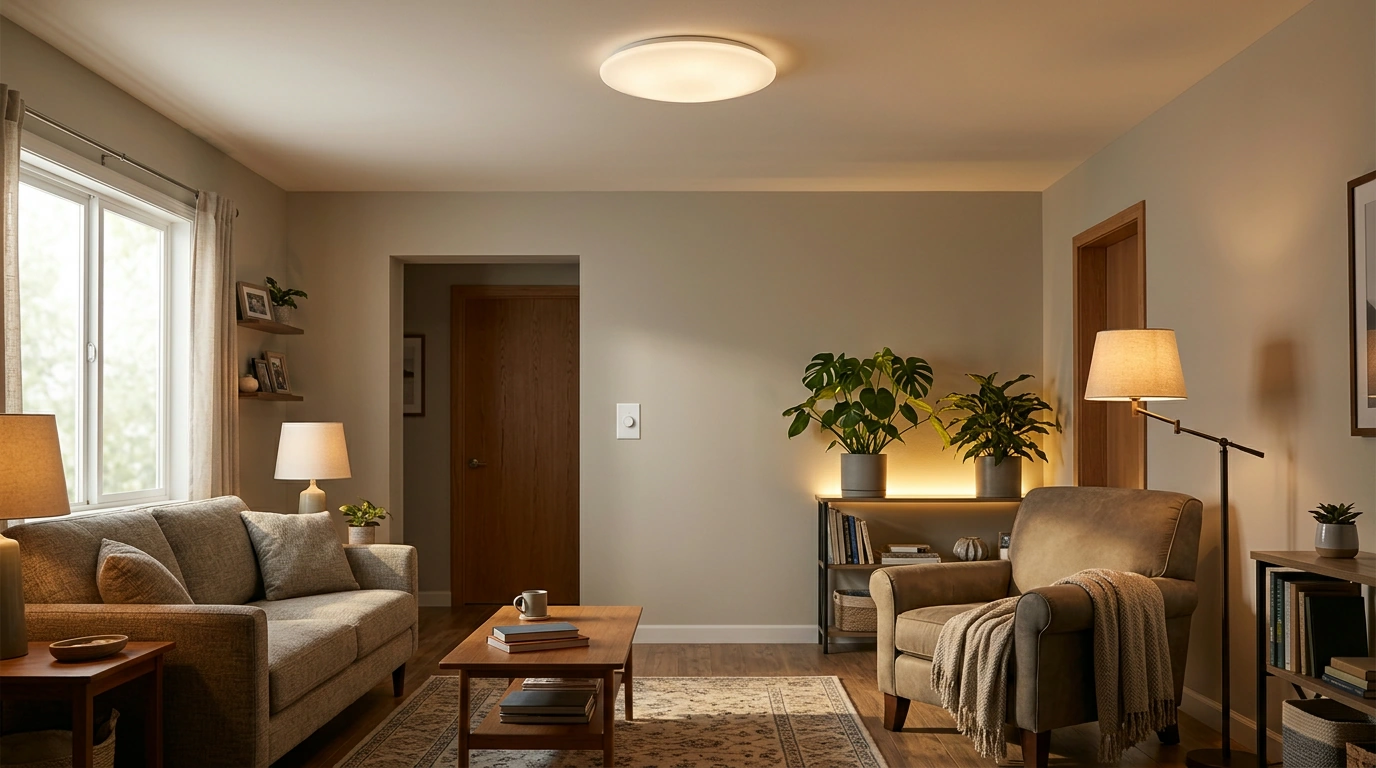
Brighten Your Home the Smart Way (Without a Full Remodel)
Good lighting changes how your home feels and how it functions—without turning your weekend into a demolition project. Our team recommends focusing on three things: layering (ambient, task, accent), control (dimming and color temperature), and placement (reducing glare and shadows). When you make small, deliberate upgrades room by room, spaces look cleaner, cozier, and more intentional—while everyday routines get easier. For more guidance, see 10 Ways to Bring More Natural Light into Your Home.
If you want a structured, step-by-step roadmap you can follow at your own pace, we created Brighten Your Home the Smart Way: A Guide to Home Upgrades for Better Lighting to help you plan upgrades that feel “finished,” not piecemeal. For further reading, see Energy-Saving Home Improvement Ideas – nyserda – NY.Gov.
Start with the “three layers” that make a room feel finished
The fastest way to improve lighting is to stop relying on one overhead fixture to do everything. Instead, build a simple three-layer plan:
- Ambient lighting: your base layer that fills the room (flush mounts, recessed lights, well-placed floor lamps). Aim for even coverage so corners don’t fall flat.
- Task lighting: focused light where hands and eyes work (kitchen counters, desks, reading chairs, bathroom mirrors). Prioritize shadow-free placement.
- Accent lighting: adds depth and mood (picture lights, wall sconces, LED strips on shelves, uplighting plants). This layer makes a room look styled rather than simply “lit.”
Quick check: If a room relies on one bright overhead fixture, add one task source and one accent source before you increase overall brightness.
| Layer | Best for | Go-to fixtures | Common mistake to avoid |
|---|---|---|---|
| Ambient | Overall visibility and comfort | Flush mount, semi-flush, recessed, floor lamp | One central fixture that leaves dark corners |
| Task | Cooking, grooming, reading, working | Under-cabinet lights, desk lamp, vanity lights | Light placed behind the user, creating shadows |
| Accent | Mood and depth | Sconces, picture lights, LED strip, uplights | Overdoing brightness instead of subtle highlights |
Choose light quality: color temperature, CRI, and glare control
Once you have layers, light quality becomes the difference between “bright” and “beautiful.”
- Color temperature (Kelvin): Warm tones feel relaxing; cooler tones feel crisp and energetic. Keep open-plan areas consistent so the space doesn’t look patchy from room to room.
- Typical targets: Bedrooms and living rooms often feel best in warm/soft white; kitchens, offices, and laundry areas can handle neutral to cooler whites for clarity.
- High CRI (color rendering): Higher CRI helps fabrics, paint, and food look accurate. It’s a quiet upgrade that makes your home look more polished.
- Glare management: Exposed bulbs can create harsh hotspots. Shades, diffusers, and indirect “bounce” lighting (aiming light toward ceilings/walls) soften the entire scene.
For deeper guidance on efficient bulbs and LED basics, the ENERGY STAR LED light bulb guide and the U.S. Department of Energy LED overview are solid references.
Add control: dimmers, scenes, and smart scheduling
Control is the upgrade that makes your lighting feel custom—without custom wiring.
- Dimmers are the fastest “smart” upgrade: One fixture becomes morning-bright, dinner-soft, and movie-night cozy.
- Smart bulbs vs. smart switches: Bulbs give you per-lamp control (and often color temperature changes). Switches control an entire circuit and keep wall controls intuitive for everyone in the home.
- Create scenes for real moments: “Morning” (brighter, cleaner), “Wind Down” (lower, warmer), “Entertain” (balanced ambient + accent), “Night Path” (low-level guidance lighting).
- Automations that feel natural: Sunset-based schedules, motion-triggered low light for hallways, and timed shutoffs for closets and laundry areas.
If you’re building scenes as part of a larger design refresh, our team also recommends pairing lighting with intentional furniture and styling choices—start with Styling High-End Living Room | eBook Guide on How to Style a High-End Living Room to make your lighting feel integrated, not “added later.”
Room-by-room upgrades that give the biggest payoff
Kitchen
Under-cabinet lighting is a game-changer because it removes counter shadows right where you prep. Pair it with a dimmable ceiling layer: bright for cleanup, softer for late-night water runs. For a high-end finish, add toe-kick or shelf accent lighting so the room has depth beyond the ceiling.
Living room
Use two to three sources spread across the room (not clustered in one corner). A floor lamp near seating plus a table lamp across the room creates balance, and one accent light aimed at art or shelving instantly makes the space look styled.
Bedroom
Prioritize warm, soft light and bedside task lighting that doesn’t blast the entire room. Wall-mounted sconces can free nightstand space and reduce visual clutter—especially helpful in smaller bedrooms.
Bathroom
Hallways and entries
Small styling moves that make lighting look intentional
A simple weekend plan to upgrade lighting without overwhelm
FAQ
What color temperature should different rooms use?
Bedrooms and living spaces usually feel best in warm to soft white light, while kitchens, bathrooms, and laundry rooms often work better with neutral to slightly cooler whites for clarity. Keep open-plan areas consistent so the lighting doesn’t look mismatched, and use dimmers to transition smoothly from day to night.
Are smart bulbs or smart switches better for whole-home lighting?
Smart bulbs are great for lamps and for room-by-room control of brightness and color temperature, while smart switches are better when you want one wall control to manage an entire circuit. For either approach, use dimmable LEDs when you plan to dim, so performance stays smooth and flicker-free.
How can lighting be brighter without feeling harsh?
Increase brightness by adding layers (more sources at lower intensity) instead of using one high-lumen bulb. Use shades, diffusers, and indirect bounce lighting to reduce glare, and choose higher-CRI LEDs so the room looks clear and natural rather than sharp.












Leave a comment