-
Shop
- Advanced Technologies
- AI Career Advantage Collection
- AI Skills
- AI Skills for Creators & Freelancers
- AI Client Management
- AI Ethics
- AI Mindset
- AI Tools & Prompts
- AI Writing & Content Creation
- Audio, Voice & Music
- Design & Visual Creation
- Email, Messaging & Communication
- Freelancing & Business
- Marketing, Ads & Conversion
- Productivity, Workflow & Automation
- SEO & Search Optimization
- Social Media Content & Growth
- Strategy, Planning & Analytics
- Video Creation & Editing
- Bathroom
- Beauty
- Best-Sellers
- Car Accessories
- Car Buying & Ownership
- Confidence
- Dating & Social Skills
- Digital Resources
- AI & Technology
- Budgeting & Saving
- Cozy Feast Collection
- Electronics & Technology
- Emotional Intelligence
- Entrepreneurship & Business Growth
- Financial Education
- Financial Independence
- Financial Mindset & Psychology
- Goal Setting
- Hobbies
- Kitchen & Recipes
- Leadership
- Mindfulness
- Mindset
- Motivation
- Online Business
- Positive Thinking
- Productivity
- Self Confidence
- Sleep Improvement
- Smart Life with AI
- Stress Management & Relaxation
- Travel Planning
- Yoga & Fitness
- Yoga & Mind-Body Practices
- Education & Learning
- Family & Parenting
- Gadgets
- Health & Beauty
- Health & Wellness
- Home & Garden
- Home Styling & Organization
- Home Supplies
- Kids & Babies
- Legend Footwear Brands Collection
- Online Business for Beginners
- Parenting & Child Development
- Patio, Lawn & Garden
- Personal Growth
- Personal Style & Fashion
- Pet Care
- Pet Lifestyle & Wellness
- Pet Supplies
- Pets
- Smart Amazon Shopping
- Stress Relief & Relaxation
- TikTok Growth & Monetization Mastery
- Travel
- Travel & Adventure
- Wealth
- Wellness
- Popular
- Best deals
Eco-Friendly Fashion Tips That Cut Your Clothing Costs
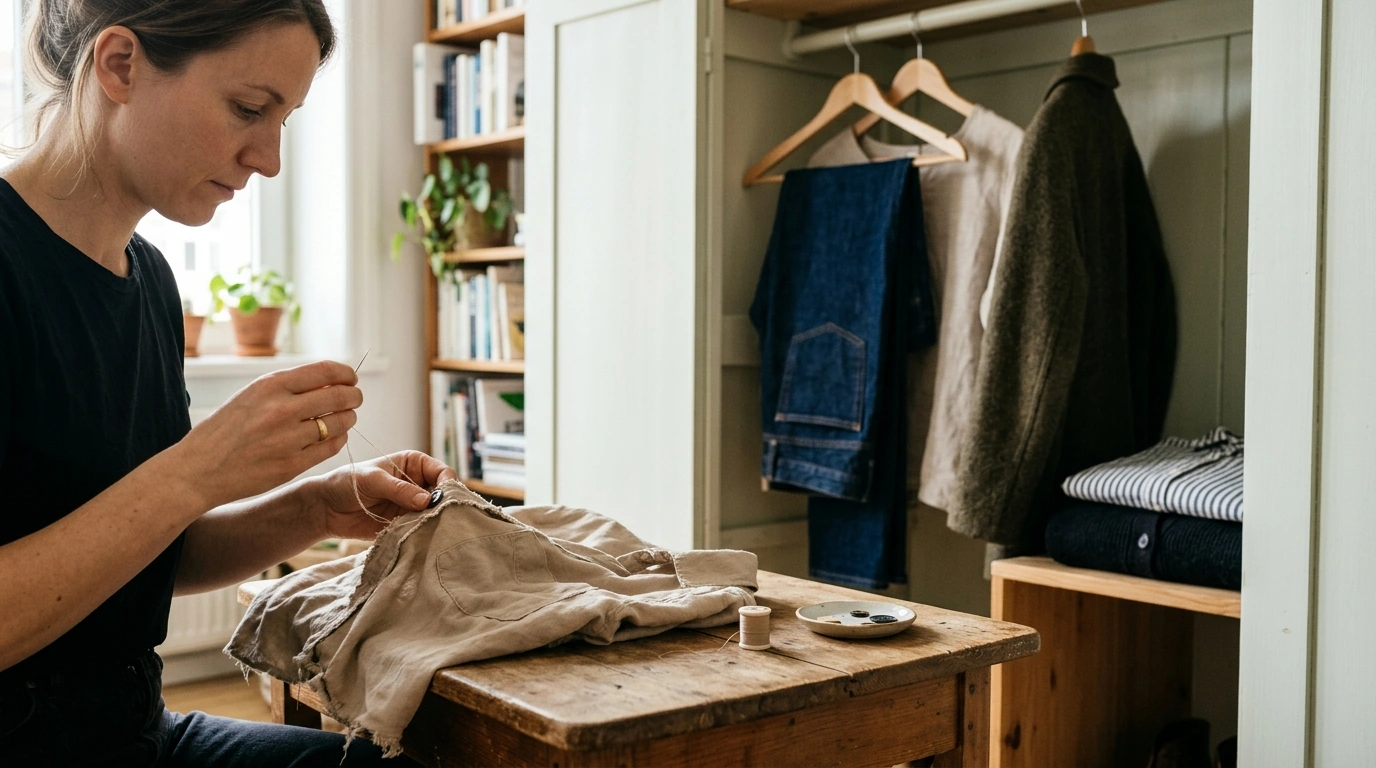
How Eco-Friendly Fashion Choices Can Save You Money (Yes, Really)
Eco-friendly fashion isn’t just about buying “green” items—it’s about building a wardrobe that works harder with fewer pieces, fewer replacements, and fewer impulse buys. The fastest way to save money is to reduce cost-per-wear, extend garment life, and make purchases that actually earn their place in rotation. Below, our team breaks sustainable fashion into a practical money plan: what to buy, what to stop buying, how to care for what you own, and how to shop secondhand without wasting time or cash.
The money-saving mindset: fewer, better, longer
If you want sustainability to pay you back, start by treating every purchase like a tool you’ll use again and again—not a one-time outfit. When you shift focus from the price tag to how often you’ll realistically wear something, spending decisions get clearer fast.
- Buy for repeat wear: prioritize pieces you can reach for weekly, not “just in case” looks.
- Think cost-per-wear: a higher-quality staple worn 60 times often costs less than a cheap trend worn 6 times.
- Build around real life: create a small set of repeatable outfits for work, weekends, and event-ready needs.
- Use a replacement rule: buy new only when an existing piece can’t be repaired or no longer fits your needs.
- Try a 24-hour pause: for non-essentials, waiting one day cuts impulse buys and return hassles.
Cost-per-wear: the simplest calculator that changes spending
Cost-per-wear is the most practical money lens you can use. Start with the categories that drain budgets: shoes, denim, outerwear, event outfits, and “cheap basics” that lose shape quickly. Estimate realistic wears based on your routine—commute days, dress code, climate, and laundry frequency. Then compare two choices by cost-per-wear, not “sale vs. full price.” A discounted mistake is still a mistake.
Cost-per-wear quick check
| Item | Total cost (with tax/shipping) | Expected wears (12 months) | Cost per wear | Buy/Skip cue |
|---|---|---|---|---|
| Neutral sneakers | $120 | 60 | $2.00 | Buy if comfortable and repairable; skip if trend-only |
| Party dress | $85 | 3 | $28.33 | Skip unless it can be re-styled for daytime |
| Classic black tee | $30 | 40 | $0.75 | Buy if fabric holds shape; skip if see-through |
| Winter coat | $220 | 90 | $2.44 | Buy if warm enough to replace layering purchases |
To keep this manageable, track only a short list: your 10 most-worn items and your 10 least-worn items. Those two lists tell you what to buy more of (in better quality) and what to stop buying entirely.
What to buy (and what to stop buying) for the biggest savings
The best “eco” purchase is the one you’ll actually wear—often. We recommend prioritizing high-rotation categories first because they deliver the fastest cost-per-wear wins.
- Buy for high rotation: everyday tops, jeans/trousers, comfortable shoes, and outerwear.
- Choose durability-friendly fabrics: heavier-weight cotton, linen, wool blends, and denim that rebounds; avoid overly thin knits that pill fast.
- Stop buying role-duplicates: five similar black tops usually means none feel quite right, so you keep shopping.
- Avoid “single-problem” pieces: items that require special socks, only work with one bra, or demand constant dry cleaning.
- Use a tight color core: pick 2–3 main colors plus one accent so outfits multiply without more shopping.
Secondhand and swaps: sustainable savings without the clutter trap
Secondhand shopping can save serious money—if you keep it focused. The goal is to fill true gaps, not collect “good deals” that never make it into rotation.
- Shop with a specific list: define the exact gap (example: “mid-rise straight-leg jeans, dark wash, 28–29”).
- Use the three-check filter: condition (stains/pilling), composition (fabric + lining), and fit flexibility (tailoring potential).
- Budget basic tailoring: hemming and simple alterations can turn a $25 find into a favorite—still cheaper than repeated new purchases.
- Host a swap with rules: clean, wearable items only; set a cap per person; donate leftovers the same day to prevent re-cluttering.
- Resell consistently: set a monthly 20-minute habit to list what you don’t wear—cash back is part of the loop.
Care and repair: where most long-term savings happen
A 30-day sustainable wardrobe reset that saves money fast
Use the guide as a repeatable system (not a one-time read)
If you want a step-by-step framework you can reuse each season, our team put it into a dedicated checklist-style download: How Eco-Friendly Fashion Choices Can Save You Money – A Guide to Sustainable Fashion for Saving Money.
And because sticking to a simpler wardrobe is also a confidence skill (especially when you’re saying “no” to impulse buys), you may also like: Confident Again: Your Step-by-Step Guide to Rebuilding Self-Belief.
A few credible resources worth bookmarking
- U.S. EPA: Textiles — Material-Specific Data
- Ellen MacArthur Foundation: A New Textiles Economy
- Fashion Revolution: Why Fashion Matters
FAQ
Is sustainable fashion always more expensive upfront?
Sometimes, yes—but it often costs less over time because you replace items less frequently, avoid “discount mistakes,” and drive down cost-per-wear. The real savings come from buying fewer pieces that work in more outfits.
What are the easiest eco-friendly fashion changes that save money immediately?
Start with a short no-buy period, map outfits you actually wear, and repair what you already own. Then stop buying duplicates, shop secondhand with a specific list, and keep your wardrobe in a cohesive color palette so everything mixes easily.
How do you avoid overbuying when shopping secondhand?
Shop with a defined gap list, check condition/fabric/fit flexibility, and set a firm spend cap before you browse. A simple rule is: don’t buy it unless it works with at least three outfits you can name immediately.
Recommended for you



Creator Monetization Myths: Build Real Income Online
Oct 15, 2026
Smart Lighting Upgrades to Brighten Your Home Fast
Oct 16, 2026












Leave a comment