-
Shop
- Advanced Technologies
- AI Career Advantage Collection
- AI Skills
- AI Skills for Creators & Freelancers
- AI Client Management
- AI Ethics
- AI Mindset
- AI Tools & Prompts
- AI Writing & Content Creation
- Audio, Voice & Music
- Design & Visual Creation
- Email, Messaging & Communication
- Freelancing & Business
- Marketing, Ads & Conversion
- Productivity, Workflow & Automation
- SEO & Search Optimization
- Social Media Content & Growth
- Strategy, Planning & Analytics
- Video Creation & Editing
- Bathroom
- Beauty
- Best-Sellers
- Car Accessories
- Car Buying & Ownership
- Confidence
- Dating & Social Skills
- Digital Resources
- AI & Technology
- Budgeting & Saving
- Cozy Feast Collection
- Electronics & Technology
- Emotional Intelligence
- Entrepreneurship & Business Growth
- Financial Education
- Financial Independence
- Financial Mindset & Psychology
- Goal Setting
- Hobbies
- Kitchen & Recipes
- Leadership
- Mindfulness
- Mindset
- Motivation
- Online Business
- Positive Thinking
- Productivity
- Self Confidence
- Sleep Improvement
- Smart Life with AI
- Stress Management & Relaxation
- Travel Planning
- Yoga & Fitness
- Yoga & Mind-Body Practices
- Education & Learning
- Family & Parenting
- Gadgets
- Health & Beauty
- Health & Wellness
- Home & Garden
- Home Styling & Organization
- Home Supplies
- Kids & Babies
- Legend Footwear Brands Collection
- Online Business for Beginners
- Parenting & Child Development
- Patio, Lawn & Garden
- Personal Growth
- Personal Style & Fashion
- Pet Care
- Pet Lifestyle & Wellness
- Pet Supplies
- Pets
- Smart Amazon Shopping
- Stress Relief & Relaxation
- TikTok Growth & Monetization Mastery
- Travel
- Travel & Adventure
- Wealth
- Wellness
- Popular
- Best deals
Amazon Warehouse vs Subscribe & Save: Deal Checklist
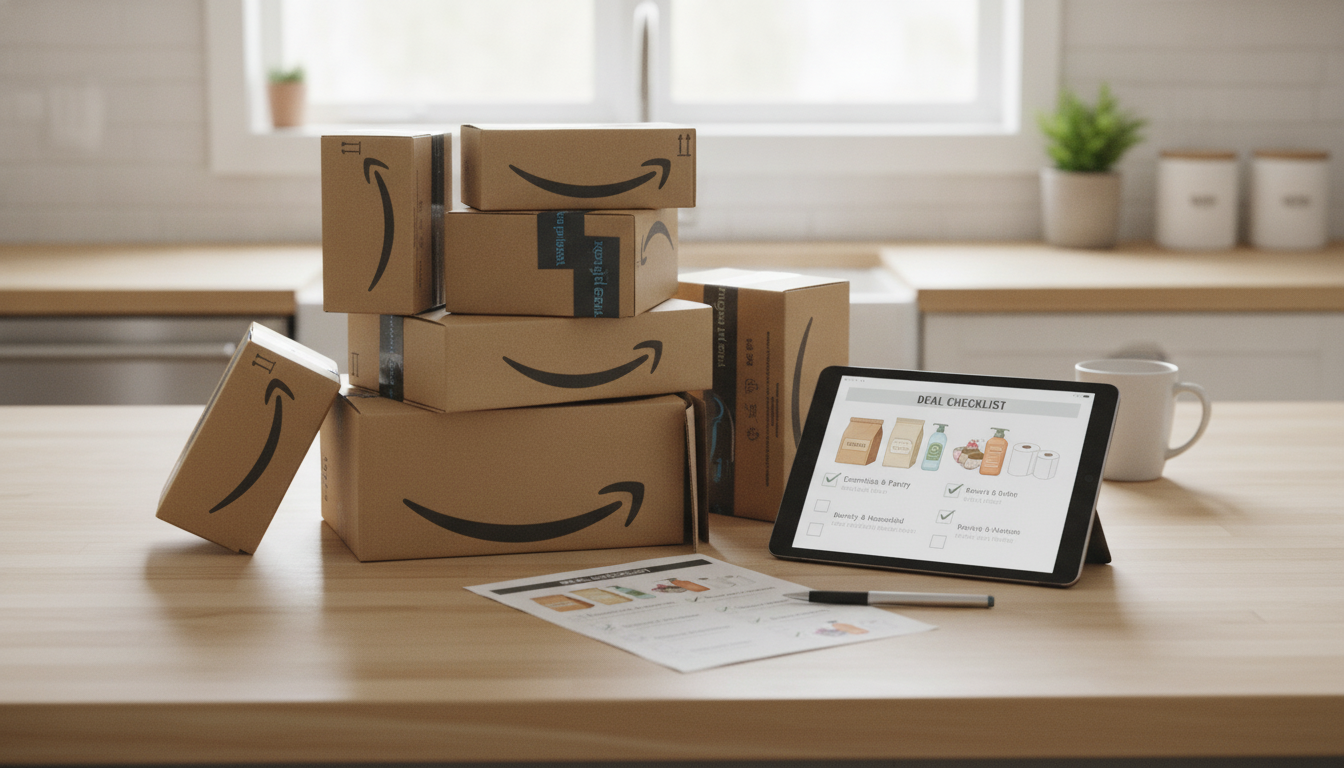
Amazon Warehouse + Subscribe & Save Checklist: A Practical Plan for Essentials, Pantry, Beauty, and Household Deals
Saving on everyday essentials gets easier with a repeatable system: buy eligible replenishment items through Subscribe & Save for recurring discounts, and use Amazon Warehouse for one-time deep cuts on open-box, used-like-new, or returned items. The goal is simple: separate “ongoing replenishment” from “one-time upgrades” so the discounts don’t accidentally turn into clutter, expired pantry goods, or returns headaches.
Below is a practical checklist approach to decide what belongs in each bucket, how to time orders, and how to avoid common deal traps—especially for pantry staples, beauty basics, and household supplies.
Know the Two Discount Paths (and What Each Is Best For)
Subscribe & Save: predictable replenishment
Subscribe & Save tends to shine when you’re buying the same items repeatedly: paper goods, detergent, vitamins, shelf-stable pantry staples, and personal care basics. The biggest win comes from consistency—setting a sensible delivery cadence and adjusting it as your real usage becomes clear. (Amazon’s overview is here: Amazon Subscribe & Save Help.)
Amazon Warehouse: one-time inventory additions
Amazon Warehouse is best treated like a “deal shelf” for durable items you don’t replace often—organizers, small appliances, storage bins, household tools, and select beauty devices—where open-box is acceptable and you can confirm condition and completeness. (Reference: Amazon Warehouse.)
Make it a rule: Warehouse = one-time, Subscribe & Save = ongoing
When you assign each purchase to the correct lane, budgeting gets cleaner and you’re less likely to over-order just to trigger a discount. Before any checkout, confirm four basics: total price after discounts, delivery timing, return window, and (for Warehouse) the condition notes.
The Combined Savings Checklist (Use Before Every Order)
- Step 1 — Classify the item: replenishment (monthly/quarterly) vs. durable (rarely replaced).
- Step 2 — Check Subscribe & Save eligibility: pick the best cadence; monthly is flexible and can be changed later.
- Step 3 — Compare against Amazon Warehouse: search the same item (or close equivalent) and read the condition notes carefully.
- Step 4 — Confirm stackability rules: Warehouse items generally don’t qualify for Subscribe & Save; plan a hybrid cart instead.
- Step 5 — Set a walk-away price: decide your maximum cost per unit (or per use) before browsing.
- Step 6 — Verify constraints for essentials: expiration dates (pantry), compatibility (beauty devices/accessories), scent/variant accuracy (cleaners), and bundle completeness.
- Step 7 — Schedule Subscribe & Save deliveries: aim for the discount threshold when it makes sense, but don’t add low-value items that create waste.
- Step 8 — Build a buffer list: identify 3–5 “safe” staples to subscribe to that can be paused anytime if stock builds up.
| Category | Choose Subscribe & Save when… | Choose Amazon Warehouse when… | Watch-outs |
|---|---|---|---|
| Pantry | The item is shelf-stable and used on a predictable schedule | Buying a one-off container, dispenser, or storage upgrade | Check expiration dates and package damage risk |
| Beauty | It’s a staple you repurchase (e.g., cotton rounds, basic skincare you tolerate well) | Tools/devices or organizers where open-box is acceptable | Avoid used items that could be unhygienic; confirm seals/accessories |
| Household | You use it routinely (detergent, trash bags, dish soap) | Durables like bins, racks, small appliances, vac parts (if complete) | Warehouse condition notes; missing parts can erase savings |
| Essentials | The item is a true repeat buy and you can pause anytime | One-time upgrades that reduce ongoing spend (dispensers, refillable systems) | Don’t overbuy just to chase a discount threshold |
How to Time Orders Without Overbuying
A simple rhythm keeps savings steady without turning your home into a storage unit:
- Use a two-list method: a “Subscription Core” (always-needed staples) and a “Warehouse Watchlist” (nice-to-have upgrades if the price drops enough).
- Track one cycle before committing: note how long a pack of paper towels or detergent lasts, then set frequency based on reality—not hope.
- Shift delivery dates instead of canceling: moving a Subscribe & Save delivery often keeps your plan intact while matching storage space and cash flow.
- Avoid discount drift: chasing a higher subscription discount by adding items you don’t need can cost more than it saves.
- Plan for seasonality: allergy meds, sunscreen, cold/flu supports, and holiday baking supplies may need temporary cadence changes.
Condition Notes and Quality Checks for Amazon Warehouse
Warehouse deals can be excellent—but only when you read the fine print. Always prioritize the item-specific notes; they matter more than the broad condition label.
For returns basics and timeframes, rely on the official policy page: Amazon Returns and Replacements Help.
Build a “No-Regrets” Subscription Core (Essentials That Usually Fit)
Common Mistakes That Quietly Cancel the Savings
Printable Digital Checklist: Put the System on Autopilot
- Amazon Warehouse + Subscribe & Save Checklist (digital download)
- Clear Pathways: Mastering High-Traffic Spaces at Home (home organization guide)
FAQ
Can Subscribe & Save discounts be used on Amazon Warehouse items?
Typically, no—Subscribe & Save applies to eligible new items on standard listings, while Warehouse items are separate and usually excluded. A practical approach is to subscribe to true replenishment staples and use Warehouse for one-off durable upgrades.
What items are safest to put on Subscribe & Save?
The safest choices are predictable staples you already use and tolerate well: household basics (trash bags, detergent), shelf-stable pantry items you consume steadily, and personal care basics like toothpaste or soap. Keep it flexible by adjusting frequency and pausing when backups build up.
How can Amazon Warehouse purchases go wrong, and how can that be prevented?
The most common problems are missing parts, condition surprises, and discounts that aren’t meaningful compared to buying new. Prevent issues by reading item-specific condition notes, verifying accessory completeness, and setting a minimum savings threshold before checking out.
Recommended for you


Reading-to-Results Goal Setting That Sticks
Jun 26, 2026













Leave a comment