-
Shop
- Advanced Technologies
- AI Career Advantage Collection
- AI Skills
- AI Skills for Creators & Freelancers
- AI Client Management
- AI Ethics
- AI Mindset
- AI Tools & Prompts
- AI Writing & Content Creation
- Audio, Voice & Music
- Design & Visual Creation
- Email, Messaging & Communication
- Freelancing & Business
- Marketing, Ads & Conversion
- Productivity, Workflow & Automation
- SEO & Search Optimization
- Social Media Content & Growth
- Strategy, Planning & Analytics
- Video Creation & Editing
- Bathroom
- Beauty
- Best-Sellers
- Car Accessories
- Car Buying & Ownership
- Confidence
- Dating & Social Skills
- Digital Resources
- AI & Technology
- Budgeting & Saving
- Cozy Feast Collection
- Electronics & Technology
- Emotional Intelligence
- Entrepreneurship & Business Growth
- Financial Education
- Financial Independence
- Financial Mindset & Psychology
- Goal Setting
- Hobbies
- Kitchen & Recipes
- Leadership
- Mindfulness
- Mindset
- Motivation
- Online Business
- Positive Thinking
- Productivity
- Self Confidence
- Sleep Improvement
- Smart Life with AI
- Stress Management & Relaxation
- Travel Planning
- Yoga & Fitness
- Yoga & Mind-Body Practices
- Education & Learning
- Family & Parenting
- Gadgets
- Health & Beauty
- Health & Wellness
- Home & Garden
- Home Styling & Organization
- Home Supplies
- Kids & Babies
- Legend Footwear Brands Collection
- Online Business for Beginners
- Parenting & Child Development
- Patio, Lawn & Garden
- Personal Growth
- Personal Style & Fashion
- Pet Care
- Pet Lifestyle & Wellness
- Pet Supplies
- Pets
- Smart Amazon Shopping
- Stress Relief & Relaxation
- TikTok Growth & Monetization Mastery
- Travel
- Travel & Adventure
- Wealth
- Wellness
- Popular
- Best deals
Everyday Socks Guide: Crew, No-Show, Fit & Checklist
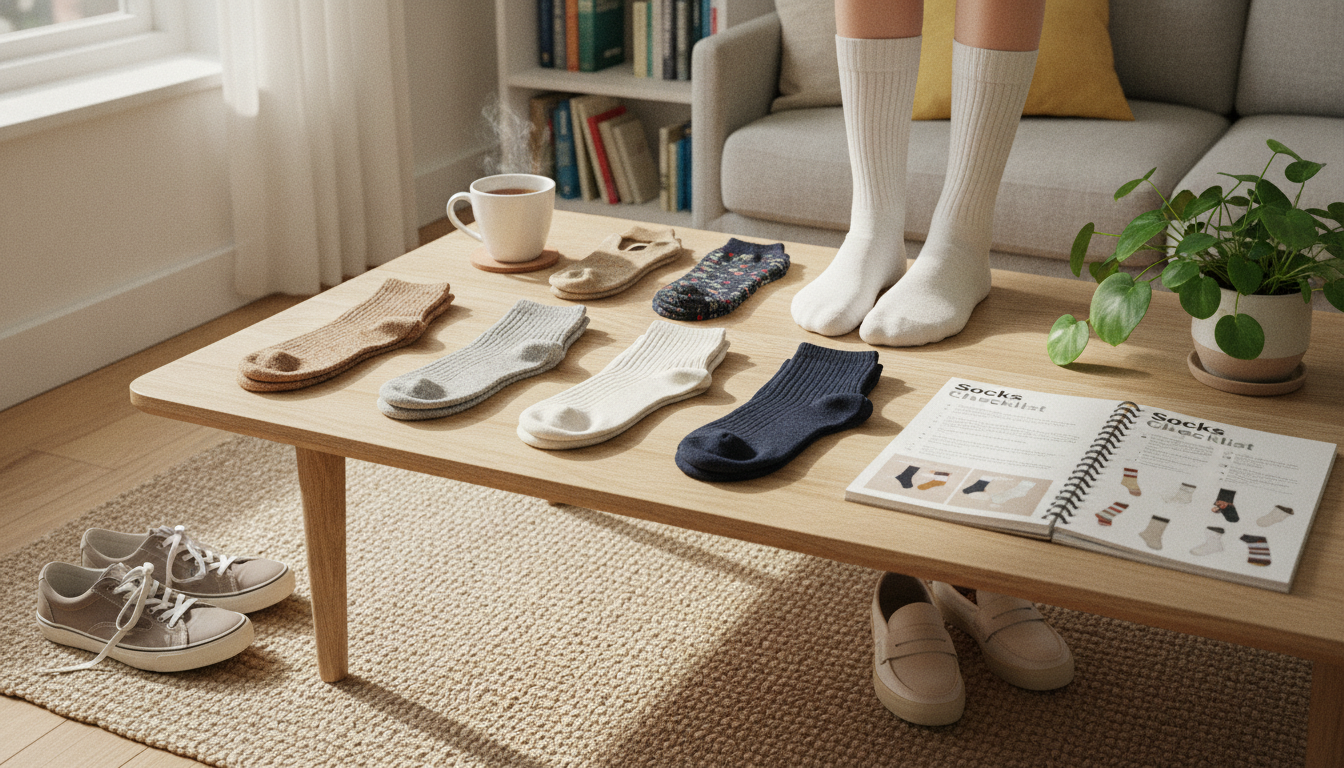
Find Your Perfect Pair of Socks: A Smart Style Guide & Checklist for Everyday Wear
A well-built sock drawer makes outfits look sharper, shoes fit better, and mornings faster. Instead of buying random multipacks and hoping they work, it helps to think in systems: sock heights that match your most-worn shoes, materials that suit your day, and fit details that prevent slipping and hot spots. Use the guide below to dial in your everyday rotation—then copy the checklist at the end to make restocking simple.
Start with the “3 Pair Rule” for everyday rotation
If your drawer feels chaotic, start small and build around real life (not fantasy workouts and special events). A practical baseline is three core categories:
- Daily casual for regular sneakers and day-to-day outfits.
- Low-profile socks for low-cut sneakers and slip-ons when you want a cleaner ankle line.
- A slightly taller option for boots, cooler days, and extra shoe protection.
Next, build around the shoes worn most often—work shoes, trainers, loafers, boots—before adding specialty pairs. To avoid running out midweek, keep a small laundry buffer: enough pairs to comfortably cover 7–10 days without sacrificing your favorite styles. Finally, choose a tight color palette (about 2–4 core colors) so nearly everything matches and orphan singles are less obvious.
Sock heights and when each one works best
Height is the fastest way to get socks “right” for both comfort and appearance. Pick the silhouettes you’ll actually wear, then fine-tune with fabric and cushioning.
- Crew socks: dependable for daily wear; pairs well with jeans, trousers, and boots; adds warmth and reduces friction.
- No-show socks: best for low-cut sneakers and slip-ons; gives a “sockless” look while reducing sweat and rubbing.
- Ankle/quarter socks: a middle ground for athletic shoes when no-shows slip or when you want a bit more coverage.
- Over-the-calf (optional): helpful for dress shoes and long wear days when staying up matters.
Quick chooser: height, best shoes, and common pitfalls
| Sock type | Best with | Why it helps | Watch out for |
|---|---|---|---|
| No-show | Low-cut sneakers, slip-ons | Clean “sockless” look, less bulk | Slipping/heel rub if grip is poor or sizing is off |
| Ankle/quarter | Running shoes, casual trainers | Balanced coverage and breathability | Visible edge may clash with some outfits |
| Crew | Everyday sneakers, boots, casual dress shoes | More protection, warmth, stays in place | Can visually shorten the leg if contrast is harsh |
| Over-the-calf | Dress shoes, long wear days | Stays up, smooth look under trousers | Too warm for summer or active wear |
Materials that feel good and last longer
The best sock material depends on heat, sweat, and how long you’re on your feet. A quick breakdown:
- Cotton blends: soft and easy to wear, but can hold moisture; a solid pick for low-sweat days and casual use.
- Merino wool blends: temperature-regulating and odor-resistant; great for all-season wear, commuting, and travel.
- Synthetic performance blends (polyester/nylon): durable and quick-drying; helpful for workouts and long walking days.
- Elastane/spandex: a little helps shape retention; too little can sag, too much can feel overly compressive.
- Reinforced heel/toe zones: worth prioritizing if you frequently wear through socks in high-friction spots.
If you deal with friction or recurring blisters, it’s also worth reviewing basic prevention guidance from the Cleveland Clinic and general foot health tips from the American Podiatric Medical Association (APMA).
Fit checklist: stop slips, bunching, and pressure marks
Even the “right” sock can feel wrong when the fit is off. Use these quick checks to avoid the most common annoyances:
- Confirm sizing by shoe size range: if you’re between sizes, choose the size that prevents the fabric from stretching thin across the heel.
- Check the cuff: it should stay up without leaving deep rings; persistent marks can signal too-tight elastic.
- Heel pocket alignment: if the heel sits too high or low, friction increases and blisters become more likely.
- Toe seam comfort: smooth seams matter for sensitive feet and dress shoes; bulky seams can irritate on long days.
- No-show stability features: look for silicone heel grips, a deeper heel pocket, and a slightly higher sidewall.
Match socks to the day: five common scenarios
Once height and material are dialed in, choosing the right pair becomes a quick “what’s on the schedule?” decision.
Build a smart sock drawer (and keep it that way)
Printable-style checklist for finding the right pairs
Helpful digital checklists you can save
- Find Your Perfect Pair of Socks – Digital Style Guide & Checklist for Everyday Socks, Crew Socks, No-Show Socks & Building a Smart Sock Drawer
- Coffee-Ready Cozy – What to Wear for Coffee Meetups Checklist | Effortless Café Outfit Planning Guide
FAQ
How many pairs of socks are enough for a minimal, everyday sock drawer?
A practical minimal range is about 12–20 total pairs, depending on how often laundry gets done. A simple setup is 7–10 everyday pairs, 3–5 athletic pairs, and 2–4 dress pairs, with 1–2 seasonal options if needed.
Why do no-show socks slip down, and how can that be prevented?
No-shows usually slip when sizing is slightly off, the heel pocket is too shallow, or the fabric loses elasticity. Choose pairs with silicone heel grips and a deeper heel cup, and make sure your shoe isn’t so loose that it pulls the sock down with each step.
Is cotton or wool better for everyday socks?
Wool (especially merino blends) manages moisture and odor better across long days, while cotton feels soft and familiar but can stay damp. For most everyday wear, a blend (cotton with synthetics, or merino with synthetics) offers a balanced mix of comfort, durability, and easier care.
Recommended for you



Build a Goal Checklist That Actually Gets Done
Jun 26, 2026
CLEAR Framework: What the “C” Means (Capture)
Jun 26, 2026











Leave a comment