-
Shop
- Advanced Technologies
- AI Career Advantage Collection
- AI Skills
- AI Skills for Creators & Freelancers
- AI Client Management
- AI Ethics
- AI Mindset
- AI Tools & Prompts
- AI Writing & Content Creation
- Audio, Voice & Music
- Design & Visual Creation
- Email, Messaging & Communication
- Freelancing & Business
- Marketing, Ads & Conversion
- Productivity, Workflow & Automation
- SEO & Search Optimization
- Social Media Content & Growth
- Strategy, Planning & Analytics
- Video Creation & Editing
- Bathroom
- Beauty
- Best-Sellers
- Car Accessories
- Car Buying & Ownership
- Confidence
- Dating & Social Skills
- Digital Resources
- AI & Technology
- Budgeting & Saving
- Cozy Feast Collection
- Electronics & Technology
- Emotional Intelligence
- Entrepreneurship & Business Growth
- Financial Education
- Financial Independence
- Financial Mindset & Psychology
- Goal Setting
- Hobbies
- Kitchen & Recipes
- Leadership
- Mindfulness
- Mindset
- Motivation
- Online Business
- Positive Thinking
- Productivity
- Self Confidence
- Sleep Improvement
- Smart Life with AI
- Stress Management & Relaxation
- Travel Planning
- Yoga & Fitness
- Yoga & Mind-Body Practices
- Education & Learning
- Family & Parenting
- Gadgets
- Health & Beauty
- Health & Wellness
- Home & Garden
- Home Styling & Organization
- Home Supplies
- Kids & Babies
- Legend Footwear Brands Collection
- Online Business for Beginners
- Parenting & Child Development
- Patio, Lawn & Garden
- Personal Growth
- Personal Style & Fashion
- Pet Care
- Pet Lifestyle & Wellness
- Pet Supplies
- Pets
- Smart Amazon Shopping
- Stress Relief & Relaxation
- TikTok Growth & Monetization Mastery
- Travel
- Travel & Adventure
- Wealth
- Wellness
- Popular
- Best deals
Screen-Time Rules That Stick: Raise Screen-Smart Kids
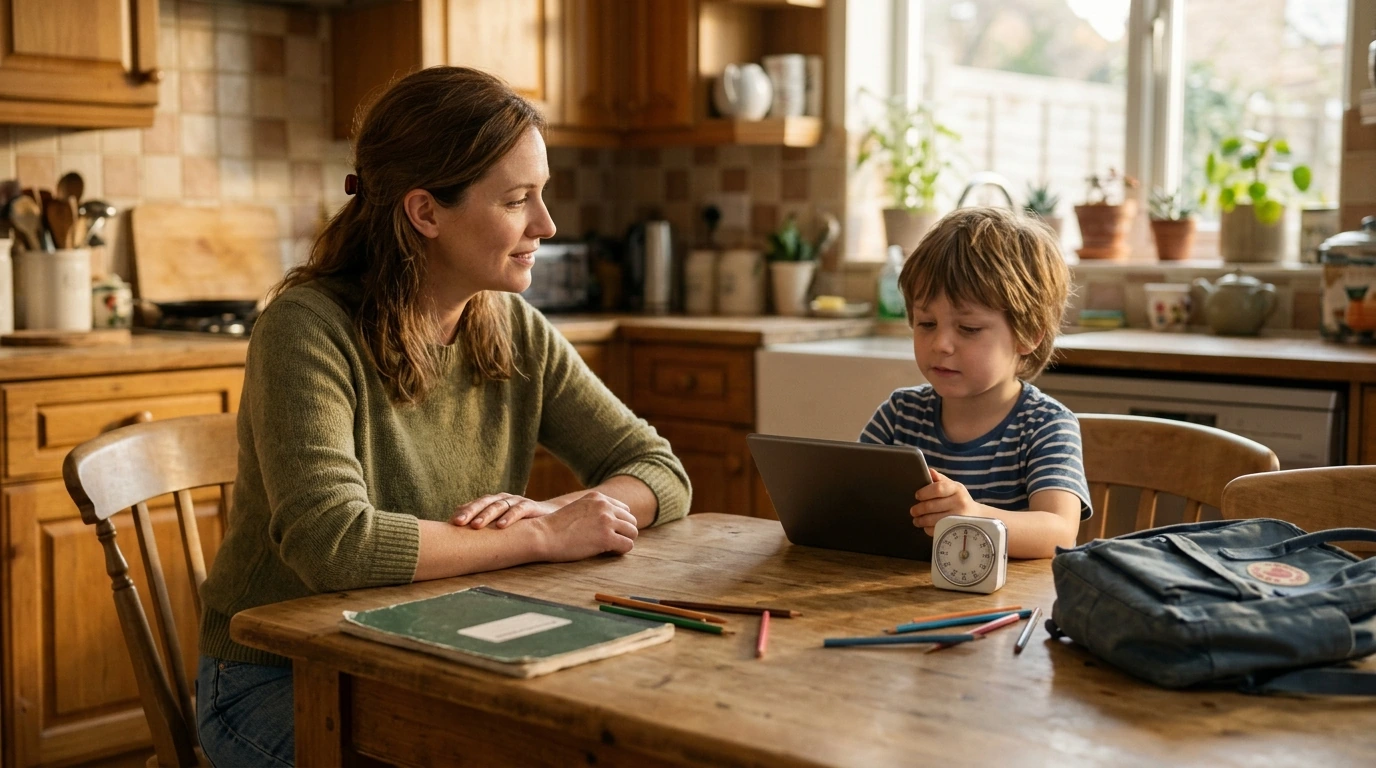
Raising Screen-Smart Kids: A Calm, Practical Plan for Screen Time That Actually Sticks
Screens are part of childhood now—school, social life, entertainment, and even downtime. The goal isn’t to “win” against devices; it’s to raise kids who can use screens with awareness, balance, and self-control. Our team built this plan for real households: busy schedules, mixed ages, and the daily tug-of-war between what kids want and what families need. You’ll find simple boundaries that don’t require constant policing, better ways to choose content, and coaching habits that help kids carry these skills forward.
What “screen-smart” looks like in everyday family life
In a screen-smart home, screens fit into the day on purpose—not as the default whenever there’s a spare minute. Your kids know the rules ahead of time (when screens are allowed, where they’re used, and what happens when time is up), and you protect offline anchors like sleep, schoolwork, movement, face-to-face time, and responsibilities.
Just as important: you prioritize consistency over perfection. One steady plan that you can enforce on tired Tuesdays works better than a “new rule” every week. And you treat content quality as a real lever—learning, creativity, and connection beat passive scrolling and autoplay loops.
Start with the non-negotiables: sleep, school, and mood
If you want screen limits to feel fair (and actually stick), start by protecting the basics your child can feel in their body.
Protect sleep with simple friction
Set a screens-off buffer before bed (many families do 60–90 minutes) and keep devices out of bedrooms overnight. These two changes reduce late-night conflict and help mornings start without the “already tired” spiral. For additional guidance on children’s sleep needs, the CDC’s overview is a helpful reference: https://www.cdc.gov/sleep/index.html.
Define “must-happen-first” basics
Before entertainment screens, define what counts as a completed day: homework, chores, reading, outdoor time, packing the backpack, feeding the pet—whatever matters in your home. When these are clear, you stop renegotiating in the moment.
Watch mood signals, not just minutes
Irritability, anxiety, and “device withdrawal” (snapping, pacing, bargaining) are often a sign to tighten routines, adjust content, or reduce the number of daily screen transitions. Minutes matter, but behavior and recovery time matter more.
Build a screen-time routine that reduces arguments
Most screen fights aren’t about the exact number of minutes; they’re about surprise endings and repeated on/off negotiations. Predictable “screen windows” lower the temperature because your child isn’t constantly trying to figure out whether they can squeeze in more.
- Use planned windows (after homework, after dinner, weekend morning block) instead of constant negotiating.
- Aim for fewer transitions: one longer block is often easier than multiple short sessions.
- Create start/stop rituals: timer + 10-minute warning + 2-minute warning + a consistent shutdown step.
- Pair screens with responsibilities: time is earned through daily basics, not begged for in the moment.
- Keep rules simple enough to enforce even on busy days.
Simple screen-time schedule template (adjust to ages and school demands)
| Time of day | Default rule | Best-fit screen types | Parent note |
|---|---|---|---|
| Before school | No entertainment screens | Music/podcast only (optional) | Protect calm mornings and on-time departure |
| After school | Screens after homework + snack + movement | Educational, creative, or selected shows | Use a single block to reduce repeat negotiations |
| Dinner to bedtime | Screen-free dinner; screens off 60–90 minutes before sleep | None (or family co-viewing earlier) | Improves sleep and lowers evening conflict |
| Weekends | One planned block + one flexible block | Games with breaks, movie night, hobby apps | Add outdoor time before the second block |
Minutes matter—but content and context matter more
Two kids can spend the same time on screens and have totally different outcomes. The difference is often what they’re doing and how the device is set up.
If you want a structured way to map content choices to your child’s age and your family’s values, the American Academy of Pediatrics Family Media Plan is a solid starting point: https://www.healthychildren.org/English/media/Pages/default.aspx. Common Sense Media also offers practical planners and reviews: https://www.commonsensemedia.org/.
A family media agreement that kids can follow
Teaching self-regulation instead of policing every minute
When screens become a daily fight: a reset that works
Tools we keep coming back to (and why they help)
- Raising Screen-Smart Kids: The Ultimate Guide to Managing Screen Time for Your Children — built to help you set routines, boundaries, and content standards that work across different ages.
- Confident Again: Your Step-by-Step Guide to Rebuilding Self-Belief — helpful when screens have become a go-to coping tool and you want to strengthen confidence and resilience offline.
FAQ
How much screen time is reasonable for kids without turning it into a constant battle?
Use a flexible range based on age and school demands, then make the routine consistent: protect sleep, require responsibilities first, and keep screen windows predictable. Pay closer attention to mood, sleep, and school than to an exact minute count.
Should screens be allowed during homework time?
Set a default of homework first, with exceptions only for school-required tools. If music helps focus, keep it audio-only; for older kids, practice single-tasking with the phone out of reach and breaks scheduled.
What’s the best way to handle tantrums or meltdowns when it’s time to turn screens off?
Use the same warning system every time (10 minutes, then 2 minutes), a clear stop ritual, and a predictable consequence if the rule is broken. Reduce daily transitions and avoid content designed to pull kids into endless autoplay or short-form feeds.
Recommended for you



Converse Star Meaning: The Story Behind the Logo
Oct 14, 2026
City Smart Rides: Compact Car Ebook for City Driving
Oct 14, 2026













Leave a comment