-
Shop
- Advanced Technologies
- AI Career Advantage Collection
- AI Skills
- AI Skills for Creators & Freelancers
- AI Client Management
- AI Ethics
- AI Mindset
- AI Tools & Prompts
- AI Writing & Content Creation
- Audio, Voice & Music
- Design & Visual Creation
- Email, Messaging & Communication
- Freelancing & Business
- Marketing, Ads & Conversion
- Productivity, Workflow & Automation
- SEO & Search Optimization
- Social Media Content & Growth
- Strategy, Planning & Analytics
- Video Creation & Editing
- Bathroom
- Beauty
- Best-Sellers
- Car Accessories
- Car Buying & Ownership
- Confidence
- Dating & Social Skills
- Digital Resources
- AI & Technology
- Budgeting & Saving
- Cozy Feast Collection
- Electronics & Technology
- Emotional Intelligence
- Entrepreneurship & Business Growth
- Financial Education
- Financial Independence
- Financial Mindset & Psychology
- Goal Setting
- Hobbies
- Kitchen & Recipes
- Leadership
- Mindfulness
- Mindset
- Motivation
- Online Business
- Positive Thinking
- Productivity
- Self Confidence
- Sleep Improvement
- Smart Life with AI
- Stress Management & Relaxation
- Travel Planning
- Yoga & Fitness
- Yoga & Mind-Body Practices
- Education & Learning
- Family & Parenting
- Gadgets
- Health & Beauty
- Health & Wellness
- Home & Garden
- Home Styling & Organization
- Home Supplies
- Kids & Babies
- Legend Footwear Brands Collection
- Online Business for Beginners
- Parenting & Child Development
- Patio, Lawn & Garden
- Personal Growth
- Personal Style & Fashion
- Pet Care
- Pet Lifestyle & Wellness
- Pet Supplies
- Pets
- Smart Amazon Shopping
- Stress Relief & Relaxation
- TikTok Growth & Monetization Mastery
- Travel
- Travel & Adventure
- Wealth
- Wellness
- Popular
- Best deals
Stop Comparing: Rebuild Self-Worth With Daily Resets

Reclaiming Your Self-Worth When Comparison Won’t Quit
Comparison can feel like a constant background app—quietly draining confidence, joy, and self-trust. Self-worth doesn’t come from being “ahead” of someone else; it comes from knowing what matters to you, treating yourself with respect, and practicing skills that steady your inner voice. This guide breaks down why comparison hits so hard, how to interrupt the spiral, and simple exercises to reset confidence without pretending life is perfect.
Why comparison feels unavoidable (and why it hurts)
Your brain is wired to scan for belonging and social rank cues—who’s “safe,” who’s “winning,” where you fit. Online feeds amplify those signals with highlight reels, likes, before-and-after photos, and career milestones packaged into neat captions. The result is a distorted baseline for what “normal” success, beauty, relationships, and productivity look like.
Upward comparison (looking at someone who seems “better”) often triggers shame, anxiety, and an urgent need to fix yourself. Downward comparison (looking at someone who seems “worse off”) can briefly soothe insecurity, but it rarely builds lasting self-respect—and it can numb empathy while still leaving that hollow “is this all?” feeling.
When self-worth depends on outcomes—money, weight, followers, titles, relationship status—attention shifts from values and growth to constant self-evaluation. Over time, this can make ordinary setbacks feel like proof you’re fundamentally behind. For more context on social media’s impact on mental health, see the American Psychological Association overview.
The comparison spiral: recognize the pattern early
Comparison rarely starts at your best. Common entry points include scrolling when tired, checking an ex or old friend, reading performance reviews, walking into family gatherings, or hitting a milestone birthday. The spiral tends to follow a predictable sequence: trigger → body reaction → story in your head → coping behavior.
Fast comparison check-in
| Signal | What it usually means | Reset move (under 2 minutes) |
|---|---|---|
| Urge to refresh feeds | Seeking reassurance through ranking | Stand up, drink water, name 3 things done today |
| “I’m not enough” thought | Worth tied to one metric | Replace with: “I’m learning; one metric isn’t my identity” |
| Body tension after viewing someone’s post | Threat response triggered | Slow exhale x5; unclench jaw/shoulders |
| Compulsive planning to catch up | Anxiety pretending to be productivity | Write 1 next step only; schedule it |
Also watch for body cues (tight chest, racing thoughts, irritability, sudden withdrawal) and behavior cues (doomscrolling, perfectionism, overworking, overspending, people-pleasing, canceling plans). Catching the spiral early matters because once your nervous system is activated, your mind will search for “evidence” that you’re behind—even if your life is actually moving forward.
A confidence reset built on self-respect (not hype)
Confidence is unreliable as a goal because feelings fluctuate. Self-respect is sturdier. Shift the target from “I need to feel confident” to “I’m going to act with self-respect today.” Confidence tends to follow consistent self-respecting behavior.
Try these three anchors:
- Boundaries: Decide what you will and won’t consume, tolerate, or take on when you’re depleted.
- Self-talk: Use a neutral inner voice—describe what happened without insults, then focus on choices and next steps.
- Micro-evidence: Record small wins daily (finished a task, took a walk, asked for help, said no). Your brain needs receipts.
One rule that changes everything: stop negotiating with shame. If a standard is unrealistic, adjust the standard—not your dignity.
Self-love that actually heals: skills to rebuild self-worth
Self-love isn’t a vibe; it’s a skill set that gets practiced when you’re stressed, not only when you’re doing well.
If you want a simple baseline for building self-esteem day by day, the NHS self-esteem guide is a helpful reference.
Practical boundaries for a comparison-driven world
Guided support: a structured self-worth reset you can start today
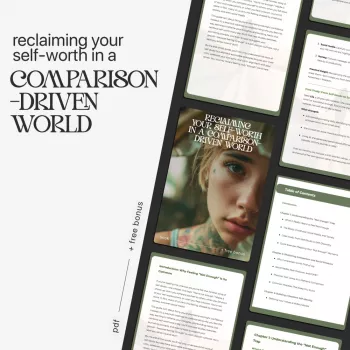
When comparison keeps repeating, structure helps more than motivation. For step-by-step exercises, prompts, and a gentle plan to move from “not enough” to grounded self-trust, explore the Reclaiming Your Self-Worth in a Comparison-Driven World – Self-Love & Healing eBook.
If comparison shows up most in conversations—hesitating, second-guessing, shrinking your opinions—building communication confidence can reduce the urge to “prove yourself” later. A practical next step is Speak Up, Shine Bright: Unlocking Confident Communication.
When to consider extra help
Reach out to a licensed professional if comparison triggers panic, depression, disordered eating behaviors, self-harm thoughts, or persistent hopelessness. Evidence-based therapies like CBT and compassion-focused approaches can help untangle beliefs about worth and performance. The APA overview of cognitive behavioral therapy explains how CBT works and what it targets.
FAQ
Why do I feel like I’m not enough when I compare myself to others?
Upward comparison focuses your attention on curated highlights and triggers a negativity bias that overweights your perceived gaps. Reframe with: “I’m seeing a snapshot, not the full story,” then take one small action that supports your values (send the email, do the workout, tidy one space, ask for help).
How can I stop comparing myself on social media without quitting entirely?
Use gradual boundaries: mute or unfollow triggers, set time blocks, and avoid scrolling when you’re tired or in bed. Give social media a purpose (learn, connect, share) and replace the most comparison-prone window with an offline routine you can repeat.
What’s a quick confidence reset when I’m spiraling?
Do 5 slow exhales, name 3 factual efforts you made today (not outcomes), choose 1 next step you can complete, and use a neutral script: “This is a tough moment. I can take one respectful step now.”
Recommended for you

Use AI to Get Unstuck: A Simple Motivation Reset
Jun 26, 2026













Leave a comment