-
Shop
- Advanced Technologies
- AI Career Advantage Collection
- AI Skills
- AI Skills for Creators & Freelancers
- AI Client Management
- AI Ethics
- AI Mindset
- AI Tools & Prompts
- AI Writing & Content Creation
- Audio, Voice & Music
- Design & Visual Creation
- Email, Messaging & Communication
- Freelancing & Business
- Marketing, Ads & Conversion
- Productivity, Workflow & Automation
- SEO & Search Optimization
- Social Media Content & Growth
- Strategy, Planning & Analytics
- Video Creation & Editing
- Bathroom
- Beauty
- Best-Sellers
- Car Accessories
- Car Buying & Ownership
- Confidence
- Dating & Social Skills
- Digital Resources
- AI & Technology
- Budgeting & Saving
- Cozy Feast Collection
- Electronics & Technology
- Emotional Intelligence
- Entrepreneurship & Business Growth
- Financial Education
- Financial Independence
- Financial Mindset & Psychology
- Goal Setting
- Hobbies
- Kitchen & Recipes
- Leadership
- Mindfulness
- Mindset
- Motivation
- Online Business
- Positive Thinking
- Productivity
- Self Confidence
- Sleep Improvement
- Smart Life with AI
- Stress Management & Relaxation
- Travel Planning
- Yoga & Fitness
- Yoga & Mind-Body Practices
- Education & Learning
- Family & Parenting
- Gadgets
- Health & Beauty
- Health & Wellness
- Home & Garden
- Home Styling & Organization
- Home Supplies
- Kids & Babies
- Legend Footwear Brands Collection
- Online Business for Beginners
- Parenting & Child Development
- Patio, Lawn & Garden
- Personal Growth
- Personal Style & Fashion
- Pet Care
- Pet Lifestyle & Wellness
- Pet Supplies
- Pets
- Smart Amazon Shopping
- Stress Relief & Relaxation
- TikTok Growth & Monetization Mastery
- Travel
- Travel & Adventure
- Wealth
- Wellness
- Popular
- Best deals
Stress-Free City Driving: Calm, Confident Urban Habits
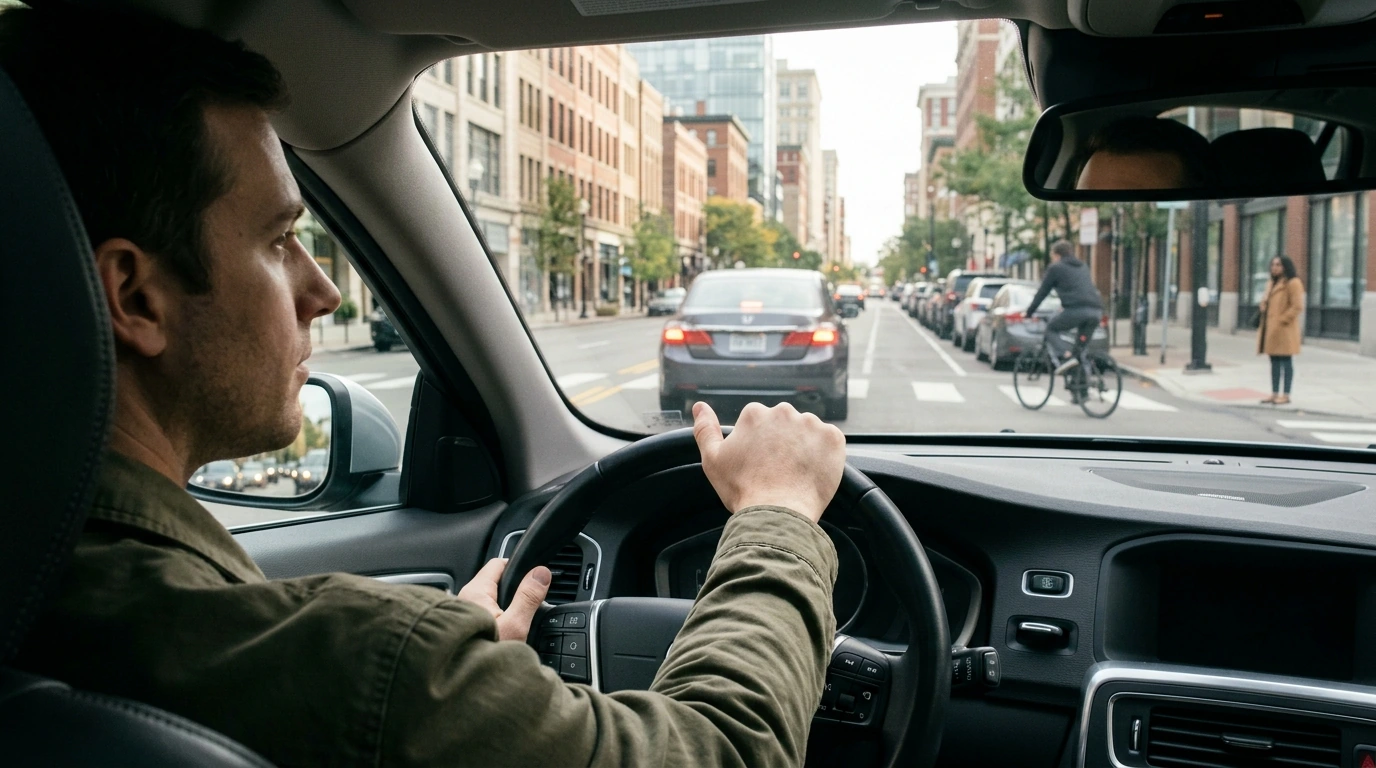
City Driving Without the Stress: A Calm, Practical System for Urban Roads
City driving can feel like a constant stream of decisions: tight lanes, sudden stops, delivery vans, cyclists, pedestrians, confusing signage, and the pressure to keep moving. The goal isn’t to drive faster or “tougher”—it’s to drive smoother, safer, and more predictably. When you drive predictably, you reduce surprise moments, and your stress drops with them.
Our team built this guide around a simple, repeatable approach used across defensive driving programs: scan consistently, plan for the next few seconds, create space, and communicate clearly. You don’t need perfect conditions—just dependable habits you can run on any block, any day.
The Stress Triggers in City Driving (and the Simple Fix for Each)
1) Uncertainty
Uncertainty is the real stressor: not knowing what the next 6 seconds will bring. Your fix is to run a consistent scan pattern and keep a larger following cushion than traffic “suggests.” Even at low speeds, extra space buys you time to think.
2) Time pressure
Time pressure amplifies risk. Build a small buffer into your departure time and give yourself permission to miss a turn. One calm reroute is safer than a last-second lane change or hard braking.
3) Sensory overload
Downtown environments throw too many inputs at once. Reduce them: set navigation before moving, silence nonessential notifications, and choose a calmer route when possible (fewer left turns, fewer unprotected merges, fewer “decision points” per mile).
4) Social pressure
Horns, tailgating, and impatient gestures can make you feel like you’re “supposed” to do something. You’re not. Prioritize legality and predictability; don’t let someone else’s urgency rewrite your driving plan.
Common City Situations and a Low-Stress Response
| Situation | What raises stress | What to do instead |
|---|---|---|
| Tailgater in stop-and-go traffic | Feeling pushed to close gaps | Hold a steady pace, keep a safe buffer, and allow the tailgater to pass when a safe lane change exists |
| Unprotected left turn | Judging speed gaps under pressure | Wait for a clear, comfortable gap; if it doesn’t appear, reroute rather than forcing the turn |
| Double-parked delivery vehicle | Sudden lane pinch | Signal early, check mirrors + blind spot, and merge smoothly rather than braking late |
| Busy crosswalk near a bus stop | Pedestrians stepping out unexpectedly | Cover the brake, reduce speed, and scan sidewalk-to-curbline continuously |
The Defensive Driving Loop: Scan, Predict, Space, Communicate
Scan (repeat, don’t “check once”)
Use a steady loop: far ahead (roughly 10–15 seconds), near zone, mirrors, then back ahead. This rhythm prevents surprise braking and makes your decisions feel less urgent because you’re seeing problems earlier.
Predict (look for clues before movement happens)
In the city, hazards rarely appear without hints. Watch for turning wheels, drifting vehicles, brake lights cascading forward, pedestrians angled toward the curb, and cyclists approaching the “door zone” beside parked cars.
Space (your built-in stress reducer)
Space is time. Time is calm. Even if traffic is slow, leaving a buffer reduces constant stop-start corrections and gives you room to respond without drama.
Communicate (make your car easy to read)
Signal earlier than you think you need to. Brake gently and a bit sooner for lights and congestion. Skip “polite but confusing” gestures—clear vehicle language (steady speed, clear signals, committed positioning) is calmer than negotiation.
Parking Confidence: A Repeatable Setup for Parallel and Tight Spots
Choose the spot calmly
If a space looks questionable, keep going. A clean decision is easier than a tense correction mid-maneuver with traffic building behind you.
Slow is smooth
Ultra-low speed is your advantage: it gives you time to steer accurately, watch curb distance, and pause without feeling like you’re “holding everyone up.”
Use reference points
Two-step check before moving
Reset without shame
Pedestrian and Cyclist Awareness: The Zones Most Drivers Miss
Crosswalk priority mindset
The cyclist “door zone”
The right-turn attention trap
Night and rain adjustments
Reduce speed earlier than feels necessary. Glare, reflections, and dark clothing can hide movement until it’s close. For deeper safety guidance, see resources from NHTSA, the IIHS, and the FHWA.
Intersections, Lanes, and Merges: Staying Calm When the Rules Feel Unclear
Approach with an “escape option”
Avoid last-second lane changes
Match pace first when merging
When unsure, default to predictable
A 7-Day Stress-Free City Driving Practice Plan
A Compact Guide That Keeps These Skills Together
If you want a single, organized reference you can revisit before a commute or parking session, our team put everything into City Driving Without the Stress (eBook). It’s built around repeatable routines: defensive scanning, space management, parking steps, and pedestrian/cyclist awareness that holds up in real traffic.
City driving stress also has a mental side: hesitation, second-guessing, and feeling “behind” the flow. If you’re rebuilding confidence after time away from city roads (or after a shaky driving season), Confident Again: Your Step-by-Step Guide to Rebuilding Self-Belief (eBook) can help you build steadier self-trust so the skills you practice actually stick when it’s busy.
FAQ
How can city driving feel less stressful right away?
Add following space, slow down earlier for intersections, and run a simple scan loop (ahead–near–mirrors–ahead). Those three moves reduce surprises, which is what usually spikes stress.
How do you handle being honked at or pressured to move faster?
Stay predictable and legal: keep a steady pace, avoid rushed merges, and let aggressive drivers pass when it’s safe. Prioritize clear signaling and clean decisions over reacting emotionally.
What’s the fastest way to build parking confidence?
Use a repeatable setup with reference points, move at ultra-low speed, and practice in a low-pressure area. Multi-step corrections are normal, so treat resets as part of the process, not a failure.
Recommended for you



Petting a Cat While Kneading: Yes—If He Likes It
Oct 19, 2026













Leave a comment