-
Shop
- Advanced Technologies
- AI Career Advantage Collection
- AI Skills
- AI Skills for Creators & Freelancers
- AI Client Management
- AI Ethics
- AI Mindset
- AI Tools & Prompts
- AI Writing & Content Creation
- Audio, Voice & Music
- Design & Visual Creation
- Email, Messaging & Communication
- Freelancing & Business
- Marketing, Ads & Conversion
- Productivity, Workflow & Automation
- SEO & Search Optimization
- Social Media Content & Growth
- Strategy, Planning & Analytics
- Video Creation & Editing
- Bathroom
- Beauty
- Best-Sellers
- Car Accessories
- Car Buying & Ownership
- Confidence
- Dating & Social Skills
- Digital Resources
- AI & Technology
- Budgeting & Saving
- Cozy Feast Collection
- Electronics & Technology
- Emotional Intelligence
- Entrepreneurship & Business Growth
- Financial Education
- Financial Independence
- Financial Mindset & Psychology
- Goal Setting
- Hobbies
- Kitchen & Recipes
- Leadership
- Mindfulness
- Mindset
- Motivation
- Online Business
- Positive Thinking
- Productivity
- Self Confidence
- Sleep Improvement
- Smart Life with AI
- Stress Management & Relaxation
- Travel Planning
- Yoga & Fitness
- Yoga & Mind-Body Practices
- Education & Learning
- Family & Parenting
- Gadgets
- Health & Beauty
- Health & Wellness
- Home & Garden
- Home Styling & Organization
- Home Supplies
- Kids & Babies
- Legend Footwear Brands Collection
- Online Business for Beginners
- Parenting & Child Development
- Patio, Lawn & Garden
- Personal Growth
- Personal Style & Fashion
- Pet Care
- Pet Lifestyle & Wellness
- Pet Supplies
- Pets
- Smart Amazon Shopping
- Stress Relief & Relaxation
- TikTok Growth & Monetization Mastery
- Travel
- Travel & Adventure
- Wealth
- Wellness
- Popular
- Best deals
Dance Confidence for Beginners: Feel the Beat & Flow
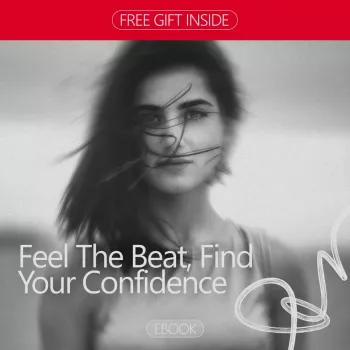
Feel the Beat, Find Your Confidence: A Beginner’s Reset for Dancing Without Overthinking
Dancing confidence rarely shows up as a sudden personality trait—it’s built through tiny, repeatable wins: hearing the beat, trusting simple movement, and letting your body learn without judgment. “Feel the Beat, Find Your Confidence” is a digital beginner-friendly guide designed to help dance anxiety soften into rhythm, self-belief, and real progress you can feel in your feet.
What “dance confidence” actually is (and why it’s learnable)
Dance confidence isn’t the same thing as being “good.” It’s the ability to keep moving even when self-conscious thoughts show up—without spiraling into freezing, apologizing, or quitting mid-song. Our team sees the biggest shift when you stop measuring progress by how you look and start measuring it by what you can do consistently: stay on time, reset quickly, and keep your body in motion.
- Confidence is behavioral: you continue moving even if you feel awkward.
- Beginners improve fastest with clarity: what to practice (beat, timing, simple grooves) and how to think while practicing (supportive cues, not self-critique).
- Real progress looks like: less freezing, steadier timing, smoother transitions, and feeling okay taking up space—even with small moves.
- A mindset-and-rhythm approach works: especially if you’re trying to “look right” before you can even feel the music.
There’s also a body component: stress can tighten breathing, posture, and coordination. When you’re tense, rhythm feels harder. The American Psychological Association explains how stress affects the body’s systems, including muscle tension and focus (APA: Stress effects on the body).
Inside the eBook: the beginner path from hesitation to flow
If you want a calm, structured reset you can actually stick with, our digital guide Feel the Beat, Find Your Confidence – How to Build Confidence to Dance (Digital eBook) walks you through the exact building blocks that make dancing feel doable again.
- Mindset reset: trade “Everyone’s watching” for practical cues that keep your attention on the music and your breath.
- Rhythm foundations: learn to find the pulse, count simply, and stay on time without complicated theory.
- Confidence-building practice structure: short, repeatable sessions designed for consistency, not perfection.
- Real-life scenarios: guidance for dancing at home, at classes, and in social settings where nerves tend to spike.
- Digital format: instant-access download that fits into a phone/tablet routine for practice anytime.
And if you want your dance practice to support your life outside the dance floor, pairing it with Confident Again: Your Step-by-Step Guide to Rebuilding Self-Belief (eBook) can help you reinforce the same skills—self-talk, consistency, and self-trust—in everyday situations.
A simple weekly routine to build confidence (without burning out)
You don’t need hour-long sessions to grow confidence. In fact, shorter practice often works better because it keeps your nervous system from labeling dance as “a big scary event.” Start with 10–15 minutes, and make it repeatable.
- Start with micro-sessions: 10–15 minutes is enough to train rhythm and reduce the “too big to start” feeling.
- Use a 3-part session: (1) beat finding, (2) one groove, (3) one confidence rep (freestyle for 30–60 seconds).
- Keep the goal measurable: “Stay on the beat for one full song,” not “Look amazing.”
- Repeat the same foundation for a week: confidence loves familiarity.
- End every session with a quick win: one move you can do cleanly, even if it’s small.
Beginner Confidence Plan (7 Days, Repeatable)
| Day | Focus | Time | Confidence Cue |
|---|---|---|---|
| Day 1 | Find the pulse (clap/step) | 10 min | “Stay with the beat, not the mirror.” |
| Day 2 | Count 1–8 and step-touch | 12 min | “Small moves still count.” |
| Day 3 | Add one upper-body groove | 12–15 min | “Loose shoulders, steady feet.” |
| Day 4 | Practice transitions (2 moves only) | 15 min | “Smooth over perfect.” |
| Day 5 | Freestyle for 30–60 seconds x 3 | 12 min | “Keep moving through the awkward.” |
| Day 6 | Dance one full song on time | 15 min | “Breathe, then move.” |
| Day 7 | Confidence review + repeat favorite win | 10 min | “I can start—that’s the skill.” |
How to stop freezing: quick mindset tools that work mid-song
Freezing is usually a stress response, not a lack of talent. When your body goes tense, your mind gets loud—and timing slips. These quick tools are designed to work while the music is already playing.
Breathing is especially effective because it tells your nervous system you’re safe. Harvard Health outlines how breath control can help quiet the stress response (Harvard Health: Relaxation techniques).
Who this guide is for (and who it helps most)
Make it even stronger: pair dance confidence with everyday self-belief
That’s why many readers pair Feel the Beat, Find Your Confidence with Confident Again: Your Step-by-Step Guide to Rebuilding Self-Belief—one supports what you do with music, the other supports what you do with your choices.
FAQ
How long does it take to build confidence to dance?
Many beginners notice a real shift in 1–2 weeks of short, consistent practice, especially in timing and willingness to keep moving. Deeper comfort tends to build over a month as your self-talk improves and your “reset” skills become automatic.
What if the beat is hard to find?
Start by stepping or clapping to the strongest pulse in the song, ideally with slower music, and aim for consistency before adding extra movement. Once your feet can stay steady, everything else becomes easier to layer on.
Is this eBook better for classes or dancing at home?
It works for both: home practice gives you repetition and a calmer environment, while classes and social settings help you apply your anchors and confidence cues when nerves show up. Using both is often the fastest way to feel steady anywhere.
Recommended for you
Stop Phone Scrolling at Night: 7-Day Sleep Reset
Oct 13, 2026












Leave a comment