-
Shop
- Advanced Technologies
- AI Career Advantage Collection
- AI Skills
- AI Skills for Creators & Freelancers
- AI Client Management
- AI Ethics
- AI Mindset
- AI Tools & Prompts
- AI Writing & Content Creation
- Audio, Voice & Music
- Design & Visual Creation
- Email, Messaging & Communication
- Freelancing & Business
- Marketing, Ads & Conversion
- Productivity, Workflow & Automation
- SEO & Search Optimization
- Social Media Content & Growth
- Strategy, Planning & Analytics
- Video Creation & Editing
- Bathroom
- Beauty
- Best-Sellers
- Car Accessories
- Car Buying & Ownership
- Confidence
- Dating & Social Skills
- Digital Resources
- AI & Technology
- Budgeting & Saving
- Cozy Feast Collection
- Electronics & Technology
- Emotional Intelligence
- Entrepreneurship & Business Growth
- Financial Education
- Financial Independence
- Financial Mindset & Psychology
- Goal Setting
- Hobbies
- Kitchen & Recipes
- Leadership
- Mindfulness
- Mindset
- Motivation
- Online Business
- Positive Thinking
- Productivity
- Self Confidence
- Sleep Improvement
- Smart Life with AI
- Stress Management & Relaxation
- Travel Planning
- Yoga & Fitness
- Yoga & Mind-Body Practices
- Education & Learning
- Family & Parenting
- Gadgets
- Health & Beauty
- Health & Wellness
- Home & Garden
- Home Styling & Organization
- Home Supplies
- Kids & Babies
- Legend Footwear Brands Collection
- Online Business for Beginners
- Parenting & Child Development
- Patio, Lawn & Garden
- Personal Growth
- Personal Style & Fashion
- Pet Care
- Pet Lifestyle & Wellness
- Pet Supplies
- Pets
- Smart Amazon Shopping
- Stress Relief & Relaxation
- TikTok Growth & Monetization Mastery
- Travel
- Travel & Adventure
- Wealth
- Wellness
- Popular
- Best deals
Stop Phone Scrolling at Night: 7-Day Sleep Reset
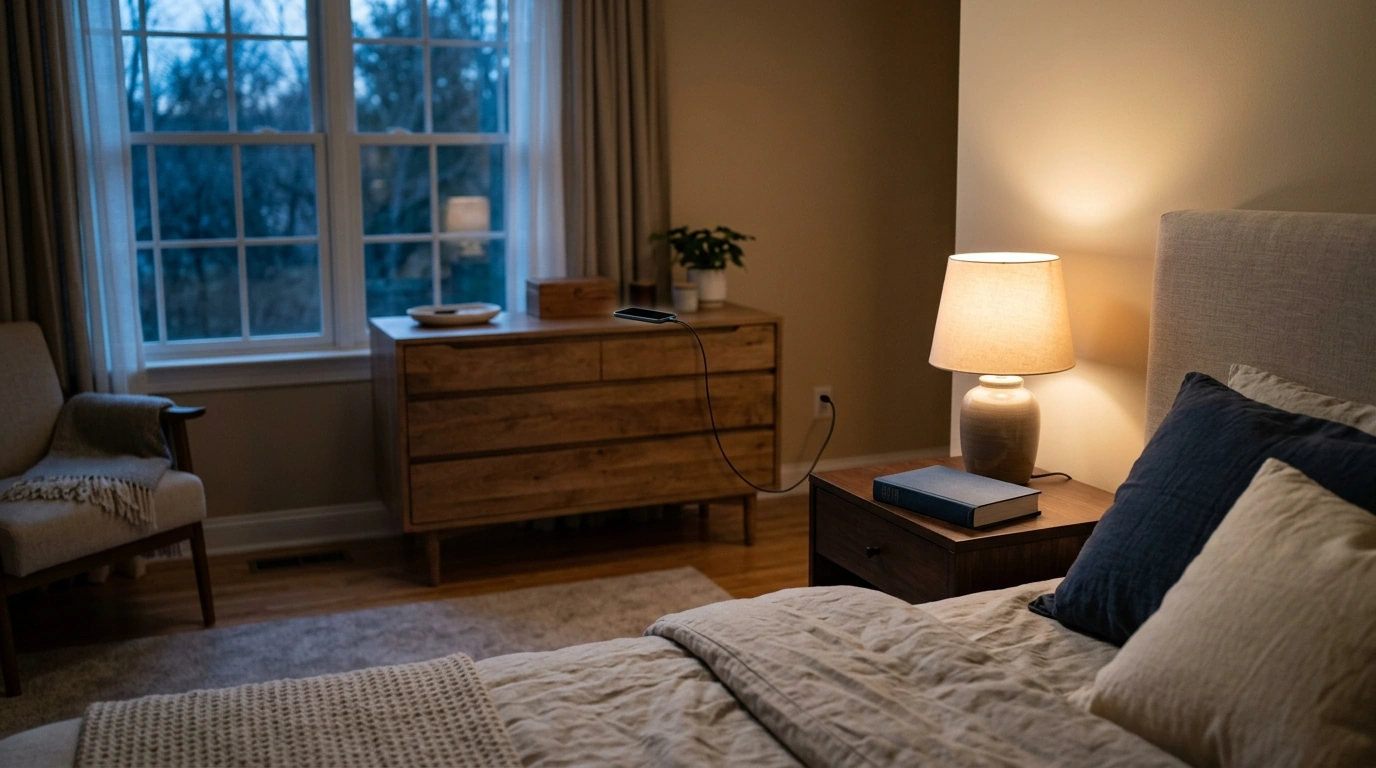
Stop Using Your Phone at Night: A Step-by-Step Reset for Deeper Sleep
Nighttime scrolling rarely feels like a choice—more like a reflex that steals sleep in small, repeatable ways. The goal isn’t perfection or deleting every app. It’s creating a simple evening system that makes the phone less tempting, the bedroom more restful, and sleep easier to reach (and stay in). Below is a practical reset: a quick 10-minute setup, a one-week step-by-step schedule, and a few if-then fixes for the moments that usually derail good intentions. For more guidance, see “Leave your smartphone out of bed”: quantitative analysis of ….
Why nights with your phone feel so hard to stop
Your phone is designed to hold attention, and nighttime is when your brain is tired enough to default to whatever feels easiest. A few patterns make “just one more minute” especially sticky: For further reading, see How to Stop Your Phone From Ruining Your Sleep.
- Variable rewards: notifications, new posts, and messages arrive unpredictably, which keeps your brain scanning for the next hit of novelty.
- “Just one more” loops: short content encourages endless continuation, so you overshoot bedtime without noticing.
- Light and alertness: bright screens and engaging content can push your body toward wakefulness when it’s trying to wind down (Harvard Health explains why this matters).
- Boundary blur: when the phone lives in bed, your brain learns that the bed is also for work, news, and social input—competing with sleep cues.
- Anxiety buffering: the phone becomes a quick escape from stress or loneliness, which makes it harder to replace with quieter habits.
Common bedtime phone triggers and cleaner replacements
| Trigger | What it usually sounds like | Swap that still feels satisfying |
|---|---|---|
| Mental chatter at lights-out | “I need to distract myself.” | Low-stimulation audio (sleep story, calm playlist) from a separate device or pre-set speaker timer |
| Fear of missing something | “What if I don’t respond?” | Set a “late replies” rule + scheduled Do Not Disturb with exceptions for true emergencies |
| Stress after a long day | “I deserve a break.” | A 10-minute decompression ritual: shower, stretch, or a short journal brain-dump |
| Boredom in bed | “I’m not sleepy yet.” | Paper book or magazine in dim light; return to bed only when drowsy |
| Work leakage | “I should clear my inbox.” | A hard stop time + a written “tomorrow list” to park tasks outside your head |
Set up a phone-friendly bedtime boundary in 10 minutes
Think of this as making the default easier. Our team recommends setting up a “system” that works even when you’re tired.
- Pick a phone parking spot outside the bed: a dresser, shelf, or hallway table—far enough that it’s inconvenient to grab.
- Move charging to that spot: plug it in there nightly (or use a longer cable only if the phone stays out of arm’s reach).
- Schedule Focus/Do Not Disturb: set it for the last 60–90 minutes before bed; allow calls from favorites only.
- Silence the usual culprits: disable non-essential notifications (social, shopping, news) and remove notification badges.
- Make the screen less inviting: enable grayscale, reduce white point/night shift, and keep your home screen minimal.
- Prep a replacement: put a book, journal, or sleep-friendly audio option near where you unwind so the habit has somewhere to go.
If you want a more structured version of this setup (plus a ready-made week plan), we built Stop Using Your Phone at Night: A Step-by-Step Guide to Prevent Smartphone Overuse and Sleep Disruptions as a simple, repeatable script you can follow.
The 7-night step-by-step plan (small changes that stick)
You’re not trying to “win” bedtime. You’re training a sequence your body can recognize. Here’s the one-week reset:
If confidence is the part that wobbles first—“Why can’t I just do this?”—our team also recommends building a small self-trust loop during the day. Confident Again: Your Step-by-Step Guide to Rebuilding Self-Belief pairs well with sleep changes because it focuses on keeping promises small enough to keep.
A simple nighttime routine that doesn’t rely on willpower
Sleep hygiene doesn’t have to be complicated (the American Academy of Sleep Medicine keeps it refreshingly practical). A minimal routine that works looks like this:
If-then fixes for the hardest moments (so one slip doesn’t reset everything)
Use the guide as your nightly checklist (not another thing to “be good at”)
For additional healthy sleep basics, the National Sleep Foundation has a helpful overview you can keep simple and realistic.
FAQ
How long before bed should the phone be put away?
A practical range is 30–90 minutes before bed, but the best starting point is what you can repeat nightly. Start with your current reality (even 15–30 minutes) and extend the window gradually, while keeping an emergency-contact exception through Focus/Do Not Disturb.
What if the phone is needed as an alarm?
Keep the phone out of bed by placing it across the room so you have to stand up to turn it off, or switch to a basic alarm clock. Set your alarm earlier in the evening, then treat the phone as “parked” so you’re not tempted to open apps after you set it down.
What should replace scrolling when sleep doesn’t come quickly?
Choose low-stimulation options like paper reading in dim light, gentle stretching, simple breathing exercises, a quick journal brain-dump, or audio with your eyes closed. The key is consistency—pick one or two replacements and repeat them the same way each night.
Recommended for you



Dance Confidence for Beginners: Feel the Beat & Flow
Oct 13, 2026













Leave a comment