-
Shop
- Advanced Technologies
- AI Career Advantage Collection
- AI Skills
- AI Skills for Creators & Freelancers
- AI Client Management
- AI Ethics
- AI Mindset
- AI Tools & Prompts
- AI Writing & Content Creation
- Audio, Voice & Music
- Design & Visual Creation
- Email, Messaging & Communication
- Freelancing & Business
- Marketing, Ads & Conversion
- Productivity, Workflow & Automation
- SEO & Search Optimization
- Social Media Content & Growth
- Strategy, Planning & Analytics
- Video Creation & Editing
- Bathroom
- Beauty
- Best-Sellers
- Car Accessories
- Car Buying & Ownership
- Confidence
- Dating & Social Skills
- Digital Resources
- AI & Technology
- Budgeting & Saving
- Cozy Feast Collection
- Electronics & Technology
- Emotional Intelligence
- Entrepreneurship & Business Growth
- Financial Education
- Financial Independence
- Financial Mindset & Psychology
- Goal Setting
- Hobbies
- Kitchen & Recipes
- Leadership
- Mindfulness
- Mindset
- Motivation
- Online Business
- Positive Thinking
- Productivity
- Self Confidence
- Sleep Improvement
- Smart Life with AI
- Stress Management & Relaxation
- Travel Planning
- Yoga & Fitness
- Yoga & Mind-Body Practices
- Education & Learning
- Family & Parenting
- Gadgets
- Health & Beauty
- Health & Wellness
- Home & Garden
- Home Styling & Organization
- Home Supplies
- Kids & Babies
- Legend Footwear Brands Collection
- Online Business for Beginners
- Parenting & Child Development
- Patio, Lawn & Garden
- Personal Growth
- Personal Style & Fashion
- Pet Care
- Pet Lifestyle & Wellness
- Pet Supplies
- Pets
- Smart Amazon Shopping
- Stress Relief & Relaxation
- TikTok Growth & Monetization Mastery
- Travel
- Travel & Adventure
- Wealth
- Wellness
- Popular
- Best deals
Easy-Access Closet System: Declutter, Zone, Maintain
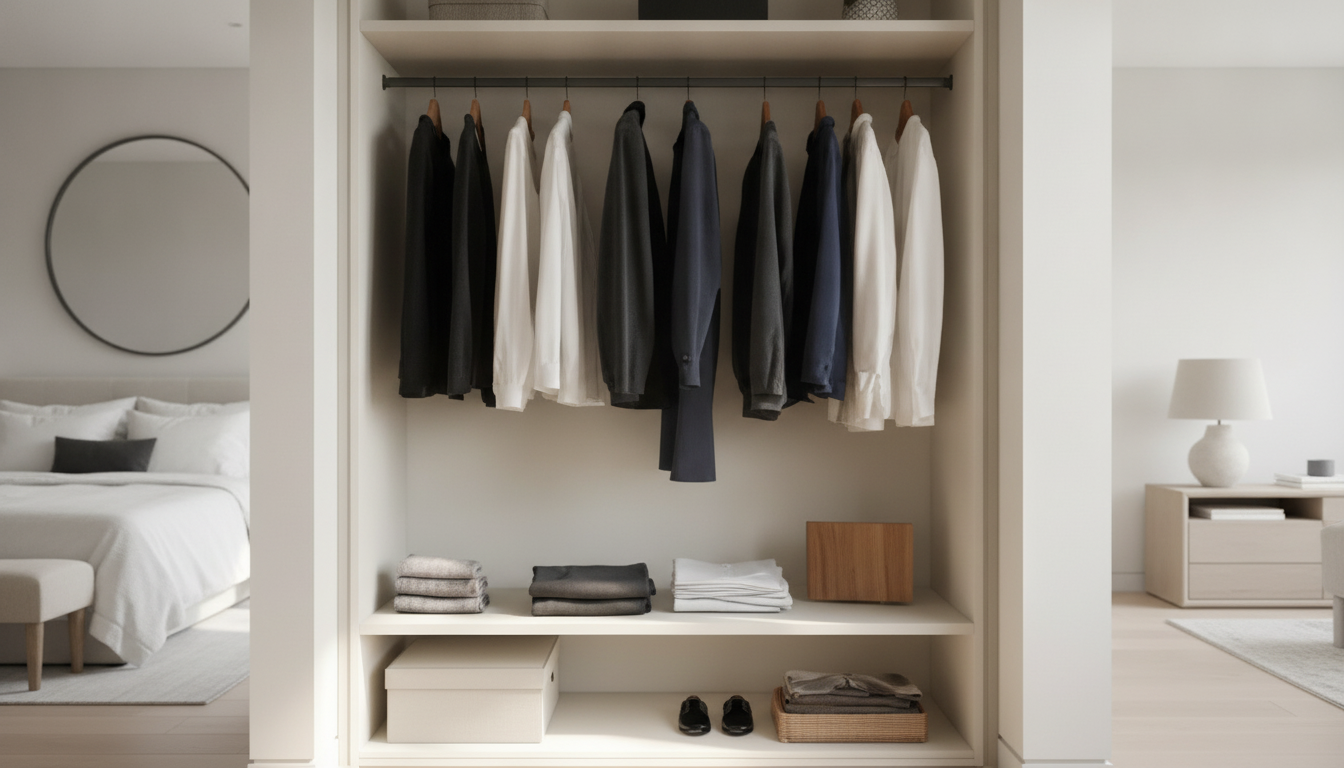
Effortless Closet Magic: A Simple System for a Tidy, Easy-Access Wardrobe
A closet that works well makes mornings faster, reduces decision fatigue, and helps clothing last longer. The easiest way to get there isn’t a one-time “perfect” makeover—it’s a repeatable system: declutter with clear rules, assign every category a home, and use space-saving tools only where they create real convenience. The result is a wardrobe that’s easy to see, easy to reach, and easy to maintain.
What “easy access” really means in a closet
Easy access isn’t about owning less or buying a full set of matching bins. It’s about reducing the little obstacles that slow you down—searching, re-folding, untangling, and shuffling stacks.
- Design around daily use: Keep most-worn items between shoulder and knee height, directly in your main line of sight.
- Reduce friction points: Avoid overstuffed shelves, tangled accessories, and “mystery bins” that hide items until they become clutter again.
- Aim for a clear flow: Undress → hamper/laundry → return clean items to consistent zones so the closet stays tidy without big reset days.
The 45-minute reset: prep, measure, and map zones
Momentum matters. Instead of pulling everything out and losing a weekend, reset one zone at a time so you can stop after 45 minutes and still have a functional closet.
- Empty only one zone at a time: Choose hanging space, a top shelf, or shoes—finish it completely before moving to the next.
- Measure key dimensions: Check hanging rod height, shelf depth, floor space, and the inside of the door to spot overlooked storage.
- Map “homes” before putting anything back: Workwear, casual, outerwear, shoes, bags, accessories, seasonal, and special-occasion items.
A quick trick: stand where you normally get dressed and note what you reach for first. That’s the start of your “prime zone.”
Decluttering rules that prevent rebound clutter
Most closets don’t get messy because of a lack of storage—they get messy because the decision rules are fuzzy. Make the rules simple enough to repeat.
- Use a three-pile decision: Keep (wear weekly/monthly), Store (seasonal or occasional), Release (donate/sell/recycle).
- Apply quick tests: Fit-and-feel (comfortable today), condition (stains, stretched elastic), and lifestyle match (supports your current routine).
- Set a “container limit”: Shelves and drawers are the boundary—when full, something must go before something new comes in.
For the Release pile, donate only what’s accepted and usable. Good donation guidelines help avoid creating waste for charities; see Goodwill Donation Guidelines. For items that are truly worn out, textile recycling (when available locally) can reduce landfill load—especially important given the scale of clothing waste documented by the EPA’s textile waste data.
Space-saving storage that actually keeps things visible
Visibility is the difference between “organized” and “forgotten.” Choose solutions that let you scan categories quickly without pulling out half the closet.
Quick guide to storage options (visibility vs. space savings)
| Solution | Best for | Why it works | Watch out for |
|---|---|---|---|
| Slim, matching hangers | Tops, light jackets, uniform look | Frees rod space and prevents shoulder bumps | Not ideal for heavy coats unless rated for weight |
| Shelf dividers | Sweaters, denim stacks, handbags | Keeps piles upright and separated | Needs shelves with enough depth to be useful |
| Clear, labeled bins | Seasonal items, scarves, backup basics | Reduces “out of sight, out of mind” loss | Overfilling makes bins hard to lift and browse |
| Hanging shoe organizer | Flats, sandals, small accessories | Uses vertical space and keeps pairs visible | Bulky shoes can stretch pockets or warp the door |
| Under-shelf baskets | Tees, sleepwear, clutches | Adds a layer without new furniture | Can block taller items and reduce visibility if overpacked |
Closet layouts for small spaces (reach, rotate, and reduce)
If the closet spills into the hallway or bedroom, pairing closet organization with a high-traffic reset can help. Clear Pathways: Mastering High-Traffic Spaces at Home is a practical companion for keeping the areas outside the closet clear, which makes the closet easier to maintain.
Maintenance that takes minutes, not weekends
For faster mornings, a small outfit-planning routine can make your “prime zone” even more effective. Coffee-Ready Cozy – What to Wear for Coffee Meetups Checklist helps streamline casual outfit choices so your closet setup pays off daily.
Using the Effortless Closet Magic eBook as a step-by-step plan
For a structured walkthrough, Effortless Closet Magic | eBook Guide on How to Organize Closets for Easy Access focuses on the exact “declutter → zone → store → maintain” rhythm that keeps closets from sliding back into chaos.
FAQ
How long does it take to organize a closet from start to finish?
Most closets take anywhere from 2 to 6 hours total depending on size and how much decluttering is needed. Breaking it into 45–90 minute zone sessions (hanging, shelves, shoes, accessories) makes it easier to finish, then wrap up with a quick labeling pass.
What’s the best way to organize clothes so they’re easy to find?
Zone by category first (tops, pants, dresses, outerwear), then order within each category by frequency of wear and optionally by color. Keep daily items at eye level, and use dividers or organizers for small pieces so nothing gets buried.
How can a closet stay organized when space is tight?
Rotate seasonally using labeled bins, limit duplicates, and use door/vertical space only for items you truly grab often. Protect a “prime zone” for your current routine so overflow doesn’t migrate to the floor or nearby furniture.
Recommended for you



Pet Still Bored With Toys? A 10-Min Enrichment Plan
Jun 26, 2026










Leave a comment