-
Shop
- Advanced Technologies
- AI Career Advantage Collection
- AI Skills
- AI Skills for Creators & Freelancers
- AI Client Management
- AI Ethics
- AI Mindset
- AI Tools & Prompts
- AI Writing & Content Creation
- Audio, Voice & Music
- Design & Visual Creation
- Email, Messaging & Communication
- Freelancing & Business
- Marketing, Ads & Conversion
- Productivity, Workflow & Automation
- SEO & Search Optimization
- Social Media Content & Growth
- Strategy, Planning & Analytics
- Video Creation & Editing
- Bathroom
- Beauty
- Best-Sellers
- Car Accessories
- Car Buying & Ownership
- Confidence
- Dating & Social Skills
- Digital Resources
- AI & Technology
- Budgeting & Saving
- Cozy Feast Collection
- Electronics & Technology
- Emotional Intelligence
- Entrepreneurship & Business Growth
- Financial Education
- Financial Independence
- Financial Mindset & Psychology
- Goal Setting
- Hobbies
- Kitchen & Recipes
- Leadership
- Mindfulness
- Mindset
- Motivation
- Online Business
- Positive Thinking
- Productivity
- Self Confidence
- Sleep Improvement
- Smart Life with AI
- Stress Management & Relaxation
- Travel Planning
- Yoga & Fitness
- Yoga & Mind-Body Practices
- Education & Learning
- Family & Parenting
- Gadgets
- Health & Beauty
- Health & Wellness
- Home & Garden
- Home Styling & Organization
- Home Supplies
- Kids & Babies
- Legend Footwear Brands Collection
- Online Business for Beginners
- Parenting & Child Development
- Patio, Lawn & Garden
- Personal Growth
- Personal Style & Fashion
- Pet Care
- Pet Lifestyle & Wellness
- Pet Supplies
- Pets
- Smart Amazon Shopping
- Stress Relief & Relaxation
- TikTok Growth & Monetization Mastery
- Travel
- Travel & Adventure
- Wealth
- Wellness
- Popular
- Best deals
Grounding Exercises: Fast Calm for Stress and Anxiety
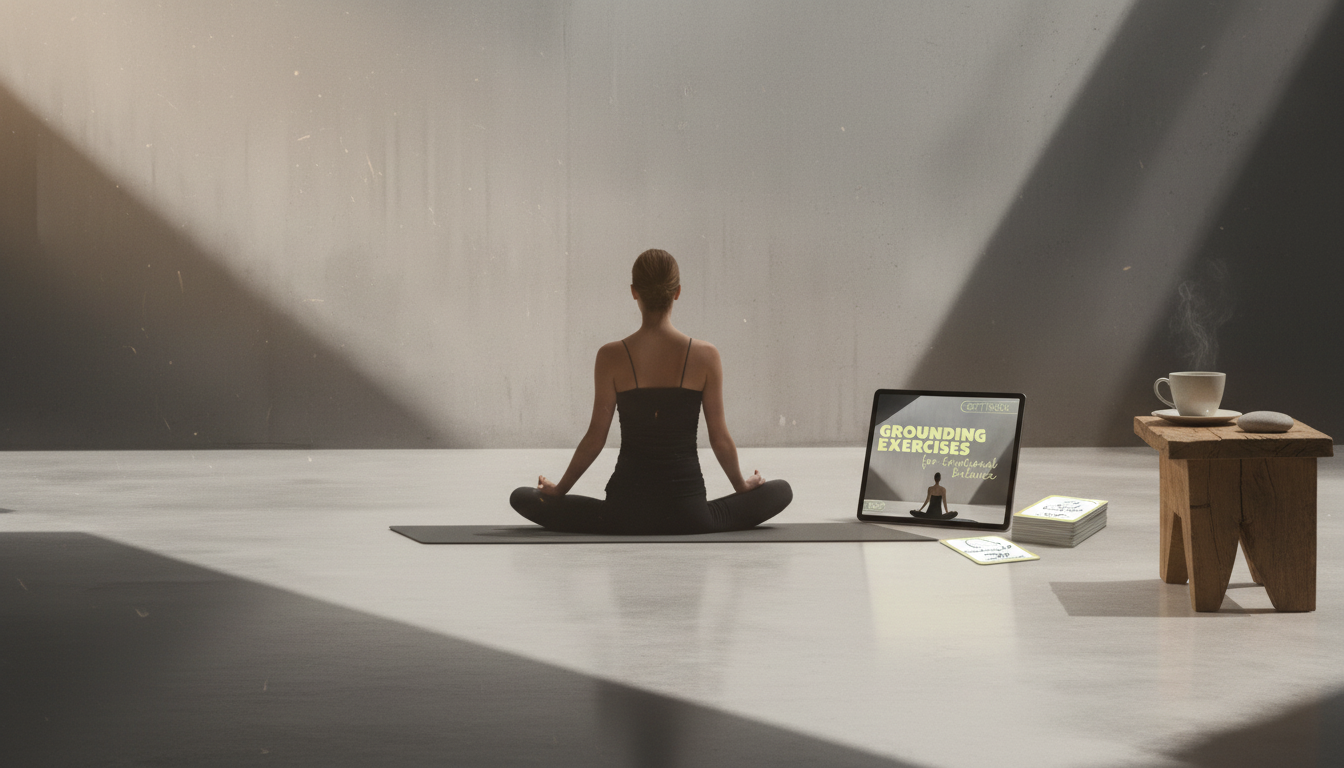
Grounding Exercises for Emotional Balance: A Practical Stress-Relief and Mindfulness Guide
When stress spikes or anxiety starts to spiral, the nervous system often needs a fast, simple way to reconnect with the present moment. Grounding exercises are short, skills-based practices that use the senses, breathing, movement, and attention to reduce overwhelm and restore steadiness. This guide focuses on realistic, “anywhere” options—especially helpful on busy days—plus a printable-style checklist approach to build a repeatable self-care routine.
What Grounding Is (and What It Isn’t)
Grounding is the skill of bringing attention back to what’s happening right now through sensations, body cues, and concrete observations. Instead of getting pulled deeper into worry loops, catastrophic thinking, or emotional flooding, you’re giving your mind something specific and real to hold onto.
When practiced consistently, grounding can support emotional balance by lowering physiological arousal—think racing heart, shallow breathing, restlessness, or agitation—and increasing a felt sense of safety. That matters because stress affects the body as much as the mind; the American Psychological Association outlines how stress can influence multiple systems over time (APA: Stress effects on the body).
Grounding isn’t about forcing feelings away or pretending everything is fine. It’s about creating enough stability to respond rather than react—so you can choose your next step with more clarity.
These practices can complement therapy or medical care, but they aren’t a substitute for professional support when symptoms are severe or persistent. For background on anxiety disorders and when to seek help, see the National Institute of Mental Health resource (NIMH: Anxiety Disorders).
Quick Reset: 60–120 Second Grounding Practices
These “fast resets” are designed for real life: before a meeting, in a hallway, during a tense text exchange, or in the middle of a busy store. Choose one and do it fully for one minute—short and complete tends to work better than long and distracted.
5–4–3–2–1 sensory scan
Name 5 things you see, 4 things you feel (contact points count), 3 things you hear, 2 things you smell, and 1 thing you taste. Say it softly or list it mentally. The goal is to anchor attention to the senses, not to do it “perfectly.”
Temperature cue
Hold a cool glass, splash cold water on your wrists, or wrap your hands around a warm mug. Keep your attention on the sensation for 10 slow breaths and notice the shift from “spinning” to “settling.”
Orienting
Slowly turn your head and eyes to scan the space. Name colors, shapes, and stable objects (doorframe, desk corner, bookshelf). This signals “safe, here, now” to the nervous system.
Box breathing (4–4–4–4)
Inhale for 4, hold for 4, exhale for 4, hold for 4. Repeat 3–5 rounds. Relax your jaw and drop your shoulders on the exhale to reinforce a downshift.
“Feet and seat” check
Press your feet into the floor and notice the points of contact. If seated, feel the chair supporting you. Gently shift weight left/right to sense steadiness and support.
| Situation | What to do | Why it helps |
|---|---|---|
| Before a meeting or call | 5–4–3–2–1 + one slow exhale | Re-engages senses and reduces mental noise |
| In public or at work | Press feet into floor + name 3 objects | Discreet, stabilizing body anchor |
| Racing thoughts at night | Box breathing + temperature cue | Slows arousal and redirects attention |
| After a stressful message | Orienting scan + shoulder drop | Signals safety and releases tension |
| Overstimulation | Cover one ear lightly + track 5 sounds | Narrows focus and reduces overwhelm |
Body-Based Grounding for Emotional Steadiness
If your stress feels physical (tight chest, jittery energy, clenched jaw), body-based grounding can be especially effective because it works with the nervous system directly.
Progressive muscle relaxation (mini version)
Wall push
Butterfly tap
Neck and jaw release
Name the feeling in the body
Mindfulness Prompts That Don’t Require Perfect Calm
Mindfulness doesn’t require a blank mind. It’s more like practicing a gentle return: noticing you’ve drifted, then coming back without scolding yourself. For a research-informed overview of mindfulness and safety considerations, see NCCIH (Meditation and Mindfulness—Effectiveness and Safety).
One-breath practice
Labeling
Three questions
Compassionate reframe
Micro-meditation (2 minutes)
Build a Personal Grounding Checklist (Morning, Midday, Night)
Morning (set the baseline)
Midday (prevent the pile-up)
Night (downshift gently)
Track what works
When Grounding Isn’t Enough (and What to Do Next)
A Simple Digital Resource to Keep Grounding Tools in One Place
If you prefer an organized, ready-to-use format, Grounding Exercises for Emotional Balance (digital guide and checklist) keeps quick resets, body-based skills, and simple prompts in one place for easy reference.
For adjacent support on stressful days, consider pairing grounding with practical communication and environment cues: Speak Up, Shine Bright: Unlocking Confident Communication can help reduce stress around tough conversations, and Clear Pathways: Mastering High-Traffic Spaces at Home supports calmer routines by reducing daily friction in the spaces you move through most.
FAQ
How often should grounding exercises be practiced for emotional balance?
Aim for a daily micro-practice (1–3 minutes) to build the habit, then use grounding as needed during stress spikes. Consistency matters more than duration, so choose a couple of easy favorites and track which ones reliably help.
What grounding exercise works best during anxiety in public?
Discreet options tend to work best: press your feet into the floor, name three objects you can see, and add one slow, longer exhale. Fingertip rubbing (thumb to each finger) can also anchor attention without drawing notice.
Can grounding help with stress-related sleep problems?
Yes—grounding can help downshift arousal at bedtime by using longer exhales, a temperature cue (cool wrists or a warm mug), and simple sensory focus. Pair it with a short nightly routine and reduce stimulation to make the effect more reliable.















Leave a comment