-
Shop
- Advanced Technologies
- AI Career Advantage Collection
- AI Skills
- AI Skills for Creators & Freelancers
- AI Client Management
- AI Ethics
- AI Mindset
- AI Tools & Prompts
- AI Writing & Content Creation
- Audio, Voice & Music
- Design & Visual Creation
- Email, Messaging & Communication
- Freelancing & Business
- Marketing, Ads & Conversion
- Productivity, Workflow & Automation
- SEO & Search Optimization
- Social Media Content & Growth
- Strategy, Planning & Analytics
- Video Creation & Editing
- Bathroom
- Beauty
- Best-Sellers
- Car Accessories
- Car Buying & Ownership
- Confidence
- Dating & Social Skills
- Digital Resources
- AI & Technology
- Budgeting & Saving
- Cozy Feast Collection
- Electronics & Technology
- Emotional Intelligence
- Entrepreneurship & Business Growth
- Financial Education
- Financial Independence
- Financial Mindset & Psychology
- Goal Setting
- Hobbies
- Kitchen & Recipes
- Leadership
- Mindfulness
- Mindset
- Motivation
- Online Business
- Positive Thinking
- Productivity
- Self Confidence
- Sleep Improvement
- Smart Life with AI
- Stress Management & Relaxation
- Travel Planning
- Yoga & Fitness
- Yoga & Mind-Body Practices
- Education & Learning
- Family & Parenting
- Gadgets
- Health & Beauty
- Health & Wellness
- Home & Garden
- Home Styling & Organization
- Home Supplies
- Kids & Babies
- Legend Footwear Brands Collection
- Online Business for Beginners
- Parenting & Child Development
- Patio, Lawn & Garden
- Personal Growth
- Personal Style & Fashion
- Pet Care
- Pet Lifestyle & Wellness
- Pet Supplies
- Pets
- Smart Amazon Shopping
- Stress Relief & Relaxation
- TikTok Growth & Monetization Mastery
- Travel
- Travel & Adventure
- Wealth
- Wellness
- Popular
- Best deals
Indoor Plant Care Basics: Light, Water, Soil & Display
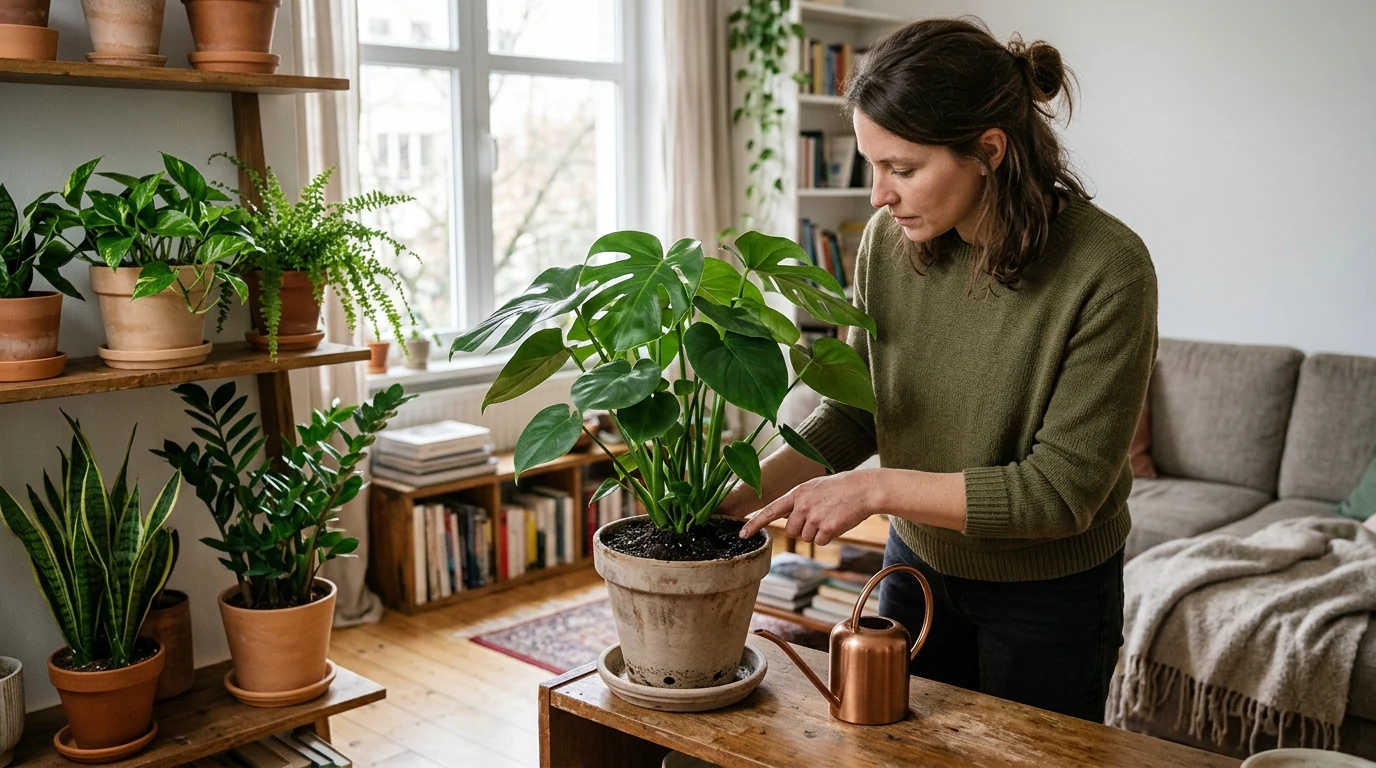
A welcoming collection of houseplants starts with a few practical choices. Match each plant to the light you have, check the soil before watering, and give its roots a suitable place to grow. You don’t need to master every plant at once. A small, repeatable routine can help you notice what’s working and make thoughtful changes when something isn’t.
Start with the light your home actually gets
Before choosing a permanent spot for a plant, watch the room over a full day. Notice when sunlight enters, how far it reaches, and whether a nearby building or tree shades the window. Window direction matters, but it isn’t the whole story: the amount and angle of light can change with the seasons.
Direct sun strikes a plant’s leaves. Bright indirect light illuminates the space without putting the plant in a strong sunbeam. A lower-light spot receives less natural light, but it isn’t the same as darkness. Some houseplants tolerate lower light; all need enough light to grow. If a room stays dim, consider whether appropriate supplemental lighting would make it a better home for plants.
It’s tempting to arrange every pot by color and shape alone. Start instead with each plant’s light needs, then build an arrangement around the spots that suit them. For more guidance on assessing indoor conditions, we turn to resources such as the University of Minnesota Extension’s houseplant guidance.
Water by soil condition, not by the calendar
A weekly reminder can be useful for checking your plants, but it shouldn’t automatically mean watering them. Feel the upper soil, lift the pot if you can to get a sense of its weight, and consider how deeply the mix has dried. Then water according to that particular plant’s preferences. Light, temperature, pot size, and season can all affect how quickly soil dries.
Use a container with drainage holes so excess water has a way out. After watering, let the pot drain and empty its saucer; roots shouldn’t be left sitting in collected water. Yellowing or drooping leaves aren’t instructions to add more water, either. Both can have several causes, so check soil moisture before deciding what to do.
| What to check | What it may tell you | Next step |
|---|---|---|
| Upper soil feels damp | Moisture is still available near the surface | Wait and check again later, considering the plant’s specific needs |
| Upper soil feels dry | The plant may be ready for water | Check deeper moisture and the plant’s preferences before watering |
| Water collects beneath the pot | Roots may be left sitting in excess water | Empty the saucer after drainage |
Give roots the right foundation
Healthy roots need a suitable potting mix, a container that drains, and enough room to grow. The right mix depends on the plant: one that prefers steady moisture may not do well in the same mix as a drought-tolerant plant. Rather than buying one soil for every pot, learn what each plant needs from its growing medium. The Royal Horticultural Society’s houseplant resources offer another place to explore plant-specific care.
Repotting can help when roots have crowded the container or the mix no longer holds moisture as you’d expect. It doesn’t mean automatically moving a plant into a much larger pot. Give the roots an appropriately sized next home with drainage, and choose a mix suited to that plant. When a plant looks unhappy, check light and watering conditions as well as the pot before assuming repotting is the answer.
Turn plant care into a display you can maintain
A good display leaves room for ordinary care. Group plants with similar light needs, keep pots easy to reach for soil checks and watering, and protect shelves and furniture from moisture. Varying heights can make a collection feel inviting, as long as taller plants don’t block the light reaching smaller ones.
If you’d like the essentials together as you plan your space, our Indoor Oasis for Thriving Houseplants eBook brings indoor plant care basics, watering, light, soil, and creative displays into one guide. For a broader look at arranging the room around your collection, our Styling High-End Living Room eBook focuses on interior styling. Let the plants’ growing conditions guide where they go, then use the rest of the room to make the arrangement your own.
Keep the routine small and consistent
Set aside a few minutes each week to feel the soil, look over the leaves, check that saucers are empty, and notice whether the light has shifted. That’s a care check, not a fixed watering schedule. Some weeks a plant may need water; other weeks it may need nothing at all.
If a plant struggles, make one adjustment at a time when possible. Moving it to a more suitable light level, changing how you assess moisture, and repotting it all at once can make its response difficult to understand. Choose plants for the space you have, learn their individual needs, and let your display grow alongside your confidence.
FAQ
How often should indoor plants be watered?
There is no universal schedule. Check the soil and follow the needs of the particular plant; light, temperature, pot size, and season can change how quickly the mix dries.
Can houseplants grow in a room with little natural light?
Some plants tolerate lower light, but all need enough light to grow. Assess the room before selecting plants and consider appropriate supplemental lighting if needed.
Does every houseplant need the same potting soil?
No. Choose a mix suited to the plant’s moisture and drainage needs, and use a container that allows excess water to escape.
Recommended for you



How to Use Color in Fashion to Shape Your Outfit
Oct 21, 2026












Leave a comment