-
Shop
- Advanced Technologies
- AI Career Advantage Collection
- AI Skills
- AI Skills for Creators & Freelancers
- AI Client Management
- AI Ethics
- AI Mindset
- AI Tools & Prompts
- AI Writing & Content Creation
- Audio, Voice & Music
- Design & Visual Creation
- Email, Messaging & Communication
- Freelancing & Business
- Marketing, Ads & Conversion
- Productivity, Workflow & Automation
- SEO & Search Optimization
- Social Media Content & Growth
- Strategy, Planning & Analytics
- Video Creation & Editing
- Bathroom
- Beauty
- Best-Sellers
- Car Accessories
- Car Buying & Ownership
- Confidence
- Dating & Social Skills
- Digital Resources
- AI & Technology
- Budgeting & Saving
- Cozy Feast Collection
- Electronics & Technology
- Emotional Intelligence
- Entrepreneurship & Business Growth
- Financial Education
- Financial Independence
- Financial Mindset & Psychology
- Goal Setting
- Hobbies
- Kitchen & Recipes
- Leadership
- Mindfulness
- Mindset
- Motivation
- Online Business
- Positive Thinking
- Productivity
- Self Confidence
- Sleep Improvement
- Smart Life with AI
- Stress Management & Relaxation
- Travel Planning
- Yoga & Fitness
- Yoga & Mind-Body Practices
- Education & Learning
- Family & Parenting
- Gadgets
- Health & Beauty
- Health & Wellness
- Home & Garden
- Home Styling & Organization
- Home Supplies
- Kids & Babies
- Legend Footwear Brands Collection
- Online Business for Beginners
- Parenting & Child Development
- Patio, Lawn & Garden
- Personal Growth
- Personal Style & Fashion
- Pet Care
- Pet Lifestyle & Wellness
- Pet Supplies
- Pets
- Smart Amazon Shopping
- Stress Relief & Relaxation
- TikTok Growth & Monetization Mastery
- Travel
- Travel & Adventure
- Wealth
- Wellness
- Popular
- Best deals
Money Mindfulness Checklist: Calm, Confident Finances
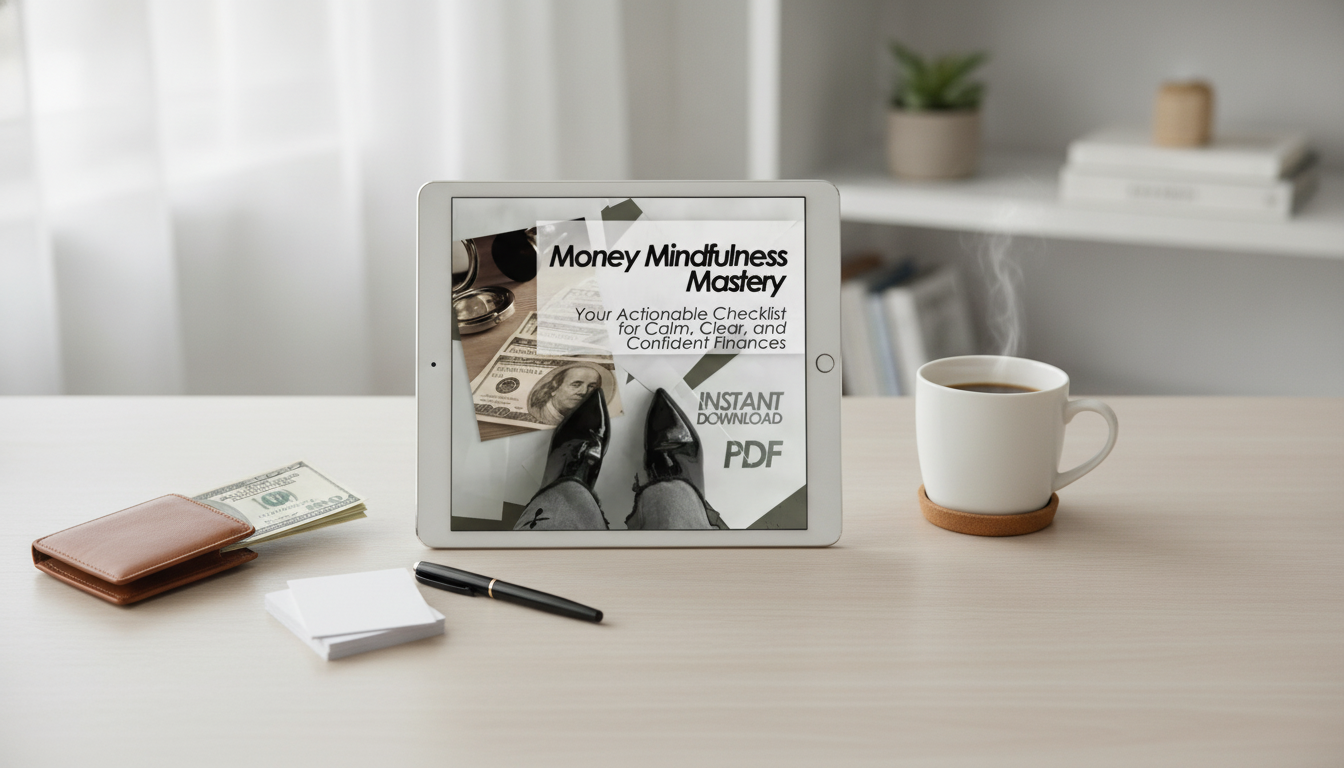
Money Mindfulness Mastery: A Calm Checklist for Clear, Confident Finances
Financial peace often comes from small, repeatable choices rather than big, stressful overhauls. A mindfulness-first checklist helps turn money decisions into simple routines: notice, choose, track, and adjust—so spending feels intentional and progress feels visible. When the process is calm enough to repeat on busy weeks, it stops feeling like “budgeting” and starts feeling like self-trust.
What “money mindfulness” looks like in daily life
Money mindfulness is the practice of paying attention to financial choices without judgment, then making a clear next move. In real life, it looks like shifting from reactive spending to intentional spending with quick pause-and-choose prompts: “Do I need this now?” “Is this aligned with what I’m prioritizing this month?”
It also means separating facts from feelings. Facts are your income, bills, balances, and due dates. Feelings might be stress, guilt, or scarcity. Naming both helps you make cleaner decisions—because you can address the feeling without letting it run the transaction.
Finally, mindfulness relies on consistent check-in moments. A couple minutes a day and one short weekly review reduce “money surprises,” build awareness, and create a system that’s simple enough to repeat even when life is noisy.
The calm finance foundation: stabilize before optimizing
Before you chase the “perfect” budget, stabilize the basics. Start by identifying your essentials: housing, utilities, food, transportation, minimum debt payments, and insurance. These categories are the foundation that keeps you safe and functional.
Next, create a one-page “money snapshot” you can understand at a glance: monthly take-home income, fixed bills, variable essentials, and current minimum debt payments. This isn’t about perfection—it’s about visibility. For budgeting and money-management fundamentals, the Consumer Financial Protection Bureau (CFPB) offers practical guidance that pairs well with a simple snapshot.
Then pick one primary goal for the next 30 days. Examples: stop overdrafts, pay bills on time, or build a starter buffer. One goal prevents overwhelm and creates momentum.
Add one boundary that lowers stress fast—unsubscribe from promo emails, remove stored cards from shopping apps, or set app limits so impulse spending has friction. Choose a tracking method that matches reality (notes app, spreadsheet, budgeting app, or envelope system). The best method is the one you’ll actually use next week.
Your actionable checklist rhythm: daily, weekly, monthly
Consistency beats intensity. A calm cadence keeps you connected to your money without making it your whole personality. Use the rhythm below as a starting point and adjust to your schedule.
| Timeframe | What to do | Why it helps |
|---|---|---|
| Daily (2 min) | Pause before purchases; note spending; glance at upcoming bills | Prevents impulse drift and last-minute surprises |
| Weekly (15 min) | Reconcile transactions; plan groceries/gas; set a realistic fun budget | Turns money into a plan, not a guess |
| Monthly (30–45 min) | Review totals; adjust categories; cancel unused subscriptions; schedule payments | Builds clarity and reduces recurring leaks |
| Quarterly (60 min) | Check credit report basics; compare rates; update goals; review emergency fund | Strengthens stability and long-term confidence |
To keep the process grounded, use short reflection prompts during reviews: “What did spending support?” and “What felt misaligned?” A few honest sentences can prevent repeating the same stress pattern next month.
Intentional spending: align money with values without deprivation
Mindful spending isn’t about cutting everything fun—it’s about choosing on purpose. Define 3–5 “top values” you want your money to support, such as health, family time, learning, a calm home, or travel. Values act like a filter: they make “yes” easier and “no” less emotional.
Clear and confident handling of bills, debt, and buffers
Buffers reduce panic. Aim for a starter cushion—even a small amount can prevent overdrafts, late fees, and the “everything is urgent” feeling. If you want a planning tool for paychecks and withholding adjustments, the IRS Tax Withholding Estimator can help you avoid unpleasant surprises at tax time.
Common roadblocks and quick resets
Digital download: Money Mindfulness Mastery checklist for financial peace
If you want a structured, repeatable routine you can follow without overthinking, the Money Mindfulness Mastery digital checklist is designed to reduce stress and support calm money habits. It’s built for clarity with quick check-ins, practical prompts, and a steady rhythm for intentional spending—so vague goals turn into specific next actions.
For a well-rounded personal growth toolkit, pair your finance routine with communication and home-flow supports. Speak Up, Shine Bright: Unlocking Confident Communication helps you handle money talks (and other hard conversations) with more confidence, while Clear Pathways: Mastering High-Traffic Spaces at Home supports a calmer environment—often a hidden trigger for stress spending.
For extra protection during financial stress, keep your guard up against “too good to be true” offers. The FTC’s guidance on avoiding scams is a smart quarterly read during your financial check-in.
FAQ
How fast can a checklist reduce money stress?
Many people feel relief within a few days because bill reminders, quick balance checks, and a simple weekly plan reduce uncertainty. Longer-lasting confidence typically builds over a few consistent cycles as you see fewer surprises and clearer progress.
Is mindful budgeting the same as strict budgeting?
No—mindful budgeting focuses on awareness and aligned choices rather than rigid rules. It can include flexibility, along with a planned enjoyment category so your budget supports real life.
What if income is irregular or expenses fluctuate month to month?
Use a conservative baseline that covers essentials, prioritize building a buffer, and decide in advance how you’ll use higher-income months. A preset plan helps prevent lifestyle whiplash while still letting you make progress.
















Leave a comment