-
Shop
- Advanced Technologies
- AI Career Advantage Collection
- AI Skills
- AI Skills for Creators & Freelancers
- AI Client Management
- AI Ethics
- AI Mindset
- AI Tools & Prompts
- AI Writing & Content Creation
- Audio, Voice & Music
- Design & Visual Creation
- Email, Messaging & Communication
- Freelancing & Business
- Marketing, Ads & Conversion
- Productivity, Workflow & Automation
- SEO & Search Optimization
- Social Media Content & Growth
- Strategy, Planning & Analytics
- Video Creation & Editing
- Bathroom
- Beauty
- Best-Sellers
- Car Accessories
- Car Buying & Ownership
- Confidence
- Dating & Social Skills
- Digital Resources
- AI & Technology
- Budgeting & Saving
- Cozy Feast Collection
- Electronics & Technology
- Emotional Intelligence
- Entrepreneurship & Business Growth
- Financial Education
- Financial Independence
- Financial Mindset & Psychology
- Goal Setting
- Hobbies
- Kitchen & Recipes
- Leadership
- Mindfulness
- Mindset
- Motivation
- Online Business
- Positive Thinking
- Productivity
- Self Confidence
- Sleep Improvement
- Smart Life with AI
- Stress Management & Relaxation
- Travel Planning
- Yoga & Fitness
- Yoga & Mind-Body Practices
- Education & Learning
- Family & Parenting
- Gadgets
- Health & Beauty
- Health & Wellness
- Home & Garden
- Home Styling & Organization
- Home Supplies
- Kids & Babies
- Legend Footwear Brands Collection
- Online Business for Beginners
- Parenting & Child Development
- Patio, Lawn & Garden
- Personal Growth
- Personal Style & Fashion
- Pet Care
- Pet Lifestyle & Wellness
- Pet Supplies
- Pets
- Smart Amazon Shopping
- Stress Relief & Relaxation
- TikTok Growth & Monetization Mastery
- Travel
- Travel & Adventure
- Wealth
- Wellness
- Popular
- Best deals
Feed Your Dog Right: Calories, Portions & Life-Stage Plans
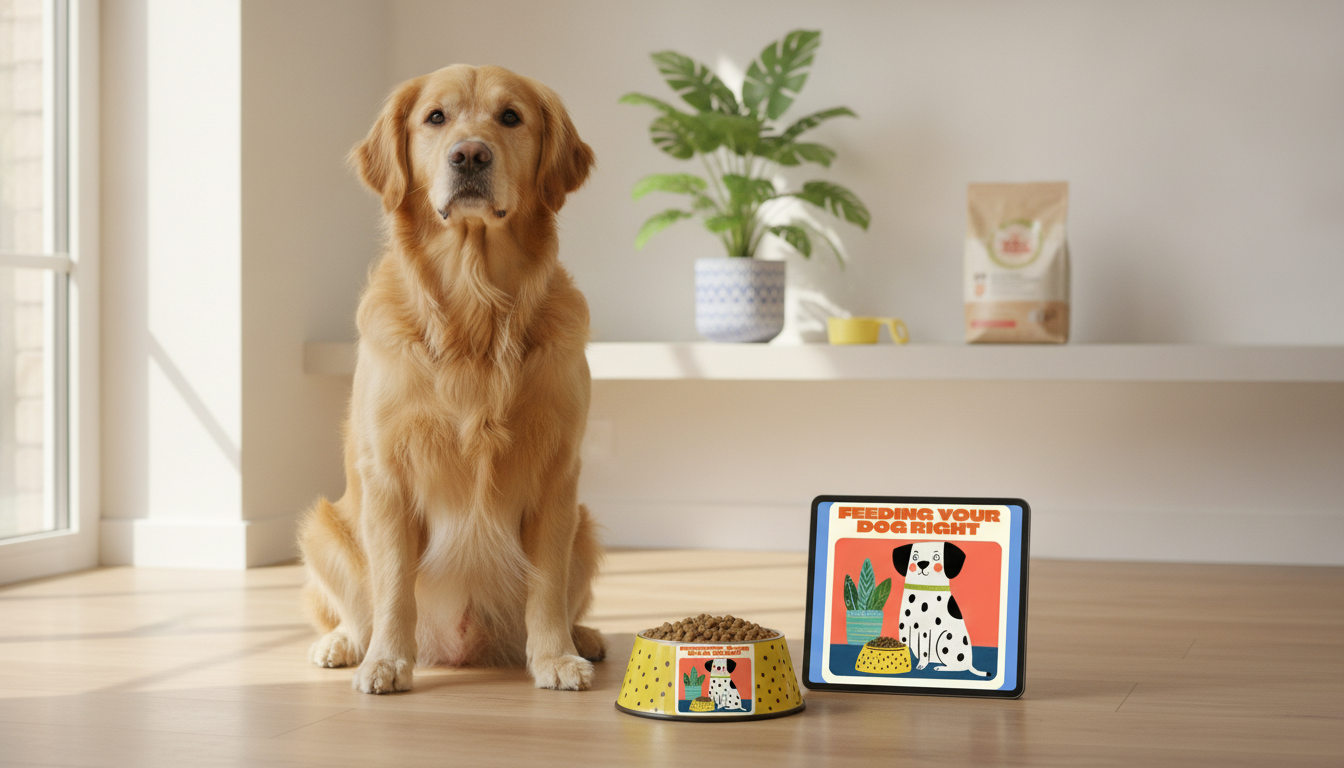
Feeding a dog well is less about guesswork and more about matching calories and nutrients to size, age, activity, and health. The goal is a routine that stays consistent day to day, while still being flexible enough to change when your dog’s needs change. Below are practical ways to set portions, time meals, read labels, and make safe adjustments using body condition—so you’re not stuck with a “standard scoop” that stops working.
Start With the Goal: Healthy Body Condition, Not a “Standard” Scoop
Portions should be driven by your dog’s body condition, not the number of cups you’ve always poured. A healthy dog typically has ribs you can feel under a light fat layer, a visible waist when viewed from above, and an abdominal tuck when viewed from the side.
- Use body condition score (BCS) along with quick waist/tuck checks to set a realistic target range for weight (not just a single “perfect” number).
- Prioritize outcomes like steady energy, comfortable stools, and stable weight over a fixed cup amount.
- Expect change: seasons, activity shifts, spay/neuter status, and aging can all alter calorie needs.
If you want a veterinary-backed framework for assessing nutrition and body condition, the AAHA Nutritional Assessment Guidelines are a helpful reference point.
How Much to Feed: A Simple Portioning Method That Actually Works
Instead of starting with “cups,” start with calories. Two foods can have very different calorie densities, so the same scoop may overfeed one dog and underfeed another.
- Find kcal per cup (or per can) on the bag/can. If it’s not there, check the manufacturer’s website for the calorie statement.
- Pick a starting daily calorie target based on current weight, target body condition, and life stage. When in doubt, start conservative and plan to reassess.
- Split the daily total into meals (most adult dogs do well with two).
- Re-check every 2 weeks: weigh your dog (or use the same scale method) and reassess BCS. Adjust total daily calories by about 5–10% at a time.
Practical portion adjustment guide (use after 10–14 days)
| What you see | What it often means | What to do next (for 10–14 days) |
|---|---|---|
| Ribs hard to feel, no waist, weight creeping up | Too many calories or too many treats | Reduce total daily food by ~10%; cap treats to ≤10% of daily calories |
| Ribs easy to feel, visible waist, stable energy | Portion is close to ideal | Keep the same daily amount; re-check in 2 weeks |
| Ribs very prominent, low energy, weight dropping | Too few calories or illness/parasites | Increase total daily food by ~10%; if appetite or stool is abnormal, contact a vet |
| Loose stool or frequent gas after portion change | Change too fast or food intolerance | Return to previous amount and transition more slowly; consider a vet-guided diet trial |
Personalized Feeding Plans by Life Stage
Life stage changes how dogs use calories and nutrients. Matching the feeding plan to the stage helps prevent common issues like rapid puppy growth, creeping adult weight gain, or senior muscle loss.
- Puppies: need more calories per pound and more frequent meals. Track growth and avoid “chubby puppy” weight gain, especially in large breeds.
- Adults: aim for consistency. Adjust for real activity (daily walks vs. weekend hikes, sport training, working roles, or mostly indoor routines).
- Seniors: watch for muscle loss and shifting mobility. Many seniors need fewer calories but still benefit from high-quality protein to support lean mass.
- Pregnant/nursing dogs: energy needs can rise dramatically. Work with a veterinarian on diet choice and feeding frequency.
Portion Guide for Every Breed: Why Breed Matters (and When It Doesn’t)
Meal Timing, Treats, and Training Calories
How to Read a Dog Food Label Without Getting Misled
- Look for “complete and balanced” and confirm the life stage the food is formulated for.
- Portion by calories (kcal), not ingredient buzzwords. Calorie content is the lever that controls weight.
- Compare the nutrient profile to your dog’s needs (weight management, sensitive digestion, athletic lifestyle).
- Be cautious with untested diets; consistent quality control and nutrition expertise matter. The WSAVA Global Nutrition Guidelines outline what to look for in responsible pet food makers.
If weight is the main concern, the Merck Veterinary Manual’s overview of pet obesity explains why small daily overages add up—and why gradual adjustments are the most sustainable approach.
Make Adjustments Safely: Transitions, Monitoring, and When to Call a Vet
A Ready-to-Use Digital Nutrition Guide for Personalized Portions
- Feeding Your Dog Right: Digital Dog Nutrition Guide walks through estimating a starting portion, splitting meals, and adjusting using BCS and check-ins.
- Clear Pathways: Mastering High-Traffic Spaces at Home can support a clutter-free feeding setup—keeping measuring tools, treats, and feeding stations organized so routines stay consistent.
- Speak Up, Shine Bright: Unlocking Confident Communication is a useful companion for clearer conversations—especially when you’re trying to describe symptoms, feeding history, and progress during veterinary visits.
FAQ
How often should a dog be fed each day?
Most adult dogs do well with 2 meals per day, while puppies typically need 3–4 smaller meals as they grow. Seniors often stay comfortable on 2 meals, but medical conditions (like diabetes or GI disease) may require a specific schedule from a veterinarian.
How can portion size be adjusted if a dog is gaining or losing weight?
Re-check weight and body condition every 10–14 days, then adjust total daily calories by about 5–10% at a time. Weigh the food for consistency and keep treats to around 10% (or less) of daily calories so “extras” don’t erase the adjustment.
Should portion sizes be measured in cups or calories?
Calories are more accurate because foods vary widely in kcal per cup or can. Use the label (or the brand’s website) to find kcal, then measure with a kitchen scale when possible since cup scoops can be inconsistent.
















Leave a comment