-
Shop
- Advanced Technologies
- AI Career Advantage Collection
- AI Skills
- AI Skills for Creators & Freelancers
- AI Client Management
- AI Ethics
- AI Mindset
- AI Tools & Prompts
- AI Writing & Content Creation
- Audio, Voice & Music
- Design & Visual Creation
- Email, Messaging & Communication
- Freelancing & Business
- Marketing, Ads & Conversion
- Productivity, Workflow & Automation
- SEO & Search Optimization
- Social Media Content & Growth
- Strategy, Planning & Analytics
- Video Creation & Editing
- Bathroom
- Beauty
- Best-Sellers
- Car Accessories
- Car Buying & Ownership
- Confidence
- Dating & Social Skills
- Digital Resources
- AI & Technology
- Budgeting & Saving
- Cozy Feast Collection
- Electronics & Technology
- Emotional Intelligence
- Entrepreneurship & Business Growth
- Financial Education
- Financial Independence
- Financial Mindset & Psychology
- Goal Setting
- Hobbies
- Kitchen & Recipes
- Leadership
- Mindfulness
- Mindset
- Motivation
- Online Business
- Positive Thinking
- Productivity
- Self Confidence
- Sleep Improvement
- Smart Life with AI
- Stress Management & Relaxation
- Travel Planning
- Yoga & Fitness
- Yoga & Mind-Body Practices
- Education & Learning
- Family & Parenting
- Gadgets
- Health & Beauty
- Health & Wellness
- Home & Garden
- Home Styling & Organization
- Home Supplies
- Kids & Babies
- Legend Footwear Brands Collection
- Online Business for Beginners
- Parenting & Child Development
- Patio, Lawn & Garden
- Personal Growth
- Personal Style & Fashion
- Pet Care
- Pet Lifestyle & Wellness
- Pet Supplies
- Pets
- Smart Amazon Shopping
- Stress Relief & Relaxation
- TikTok Growth & Monetization Mastery
- Travel
- Travel & Adventure
- Wealth
- Wellness
- Popular
- Best deals
Style Moodboard Guide: Turn Taste Into a Clear Direction
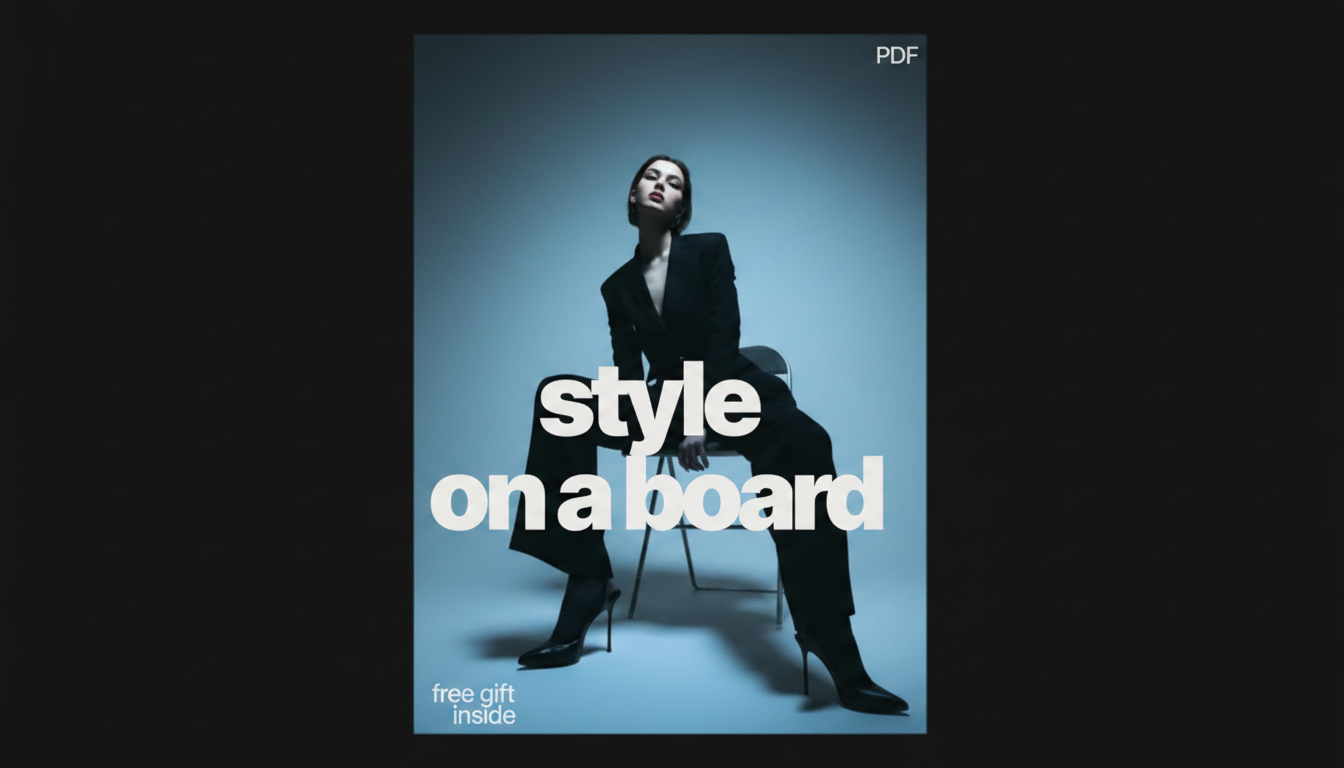
Style on a Board: Build a Moodboard That Turns Taste Into a Clear Fashion and Brand Direction
A great style moodboard does more than look pretty—it captures the patterns behind what feels “like you,” then turns those signals into choices you can repeat. When your board is clear, it becomes a practical compass for outfits, shopping decisions, content visuals, and even brand touchpoints like packaging or typography. For more guidance, see How to create a moodboard and organize your fashion inspirations?.
What a style inspiration moodboard actually does
A style moodboard is a single “north star” that pulls your aesthetic into one place—silhouettes, color, texture, styling mood, and even the settings your looks belong in. That clarity prevents random buying and scattered branding because you can quickly tell what fits and what doesn’t. For further reading, see How to Make a Fashion Mood Board — Designer Guide – StudioBinder.
Most importantly, it bridges inspiration to execution. A good board isn’t just aspirational; it becomes direction for wardrobe planning, photoshoots, packaging choices, and social visuals. It works equally well for personal style, fashion collections, creator content, and small business branding.
Pick a focus before collecting anything
Before you save a single image, define the board’s job in one line. Examples: “minimal café-core for weekday outfits” or “elevated sporty neutrals for a capsule.” This one sentence prevents your board from becoming a scrapbook of unrelated aesthetics.
Next, decide your timeframe and use-case: a season refresh, an upcoming trip, a rebrand, a campaign, or an everyday uniform. Then add constraints to reduce overwhelm—think 3 core colors, 2 hero textures, and 1 statement shape. Finally, choose a format: a digital board for easy iteration, or a physical board for tactile clarity.
If you want a guided structure you can reuse, Style on a Board – A Creative Guide on How to Create a Style Inspiration Moodboard for Fashion, Branding & Personal Aesthetic is built around prompts that help you move from “I like it” to “I can repeat it.”
Gather source material without getting stuck in endless scrolling
Collect across categories so the final board is usable, not vague. Save outfits, fabrics, accessories, hair/makeup, locations, typography, packaging, lighting, and even poses. Diverse sources help you avoid copying a single look and instead extract the underlying rules: street style, vintage catalogs, runway details, interior design, film stills, architecture, and nature palettes.
Save with context—add a quick note about what triggered the save, like “boxy blazer + pleated trouser proportion” or “warm gray + silver jewelry contrast.” Aim for volume first (about 30–60 images). Only after that should you switch into selection mode.
Moodboard ingredients that make the final style usable
| Ingredient | What it clarifies | Examples to include |
|---|---|---|
| Color cues | Repeatable palette and contrast level | Neutrals vs brights, accent color, metallic tone |
| Silhouette cues | Proportions that flatter and feel authentic | Oversized top + slim bottom, long-line coat, cropped jacket |
| Texture/material cues | Tactile identity and perceived quality | Linen, leather, rib knit, denim wash, satin sheen |
| Styling cues | How pieces are worn, not just what they are | Cuffed sleeves, layered necklaces, belt placement, sock/shoe pairing |
| Mood/setting cues | Lifestyle story and brand atmosphere | Coffee shop, coastal morning, studio light, night city glow |
| Graphic/typography cues (branding) | Visual voice beyond clothing | Serif vs sans, spacing, label style, icon shapes |
Curate: find the patterns hiding in your saves
Do a fast “yes/no/maybe” pass and delete anything that’s only trendy but not truly you. Then group the remaining images by repeating signals: shared shapes, recurring colors, similar styling moves, and comparable settings. This is where taste becomes direction.
Name three style pillars—short phrases that are easy to remember and apply. Examples: “clean lines,” “soft structure,” and “playful contrast.” Then write two short lists: your non-negotiables (elements that must appear) and your avoid list (what breaks the vibe). An avoid list is powerful because it prevents the “almost right” purchases that clutter closets and dilute brand visuals.
Build the board: arrangement that reads at a glance
Start with a hero row: 5–7 images that summarize the vibe instantly. Under that, add supporting clusters—color swatches, fabrics, accessories, and styling details. The best boards balance variety and cohesion: mix close-ups (texture and jewelry) with full looks (silhouette and proportions).
Keep it tight. A board with 12–25 strong images is usually more actionable than one with 100. If you feel torn, make a second “parking lot” board for the maybes so your main board stays decisive.
Turn the board into action: wardrobe, shopping, and brand consistency
Translate your board into a mini checklist you can actually use:
If your board leans café meetups and “effortlessly put-together,” pair it with Coffee-Ready Cozy – What to Wear for Coffee Meetups Checklist | Effortless Café Outfit Planning Guide to turn the vibe into quick outfit formulas.
Tools and formats: digital, physical, or hybrid
Common moodboard pitfalls (and quick fixes)
A simple 45-minute workflow for repeatable results
A guided template to make the process effortless
FAQ
How many images should a style moodboard have?
Start by saving about 30–60 images so patterns can emerge, then curate down. A final board of roughly 12–25 strong images is usually the sweet spot for clarity and repeatability.
What’s the difference between a personal style moodboard and a brand moodboard?
Personal boards prioritize wearability—silhouette, styling, and lifestyle context—so you can get dressed consistently. Brand boards overlap on color and texture, but also add typography, packaging cues, lighting style, and content tone.
How do you turn a moodboard into outfits you can actually wear?
Extract 3 pillars, choose 10–15 capsule items that match the board’s proportions, and define 3 signature styling moves you can repeat. Recreate 2–3 hero looks using what you already own, then use the board as a purchase filter going forward.








Leave a comment